Interior Painting
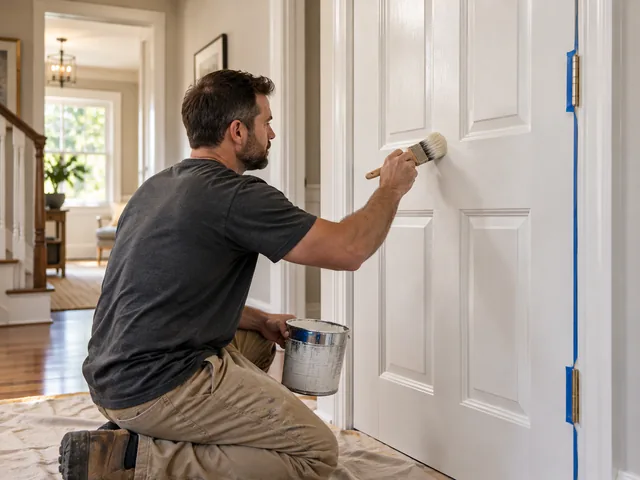
Rooms, walls and ceilings painted, with patching and prep done first.

Serving Essex & Union County, NJ
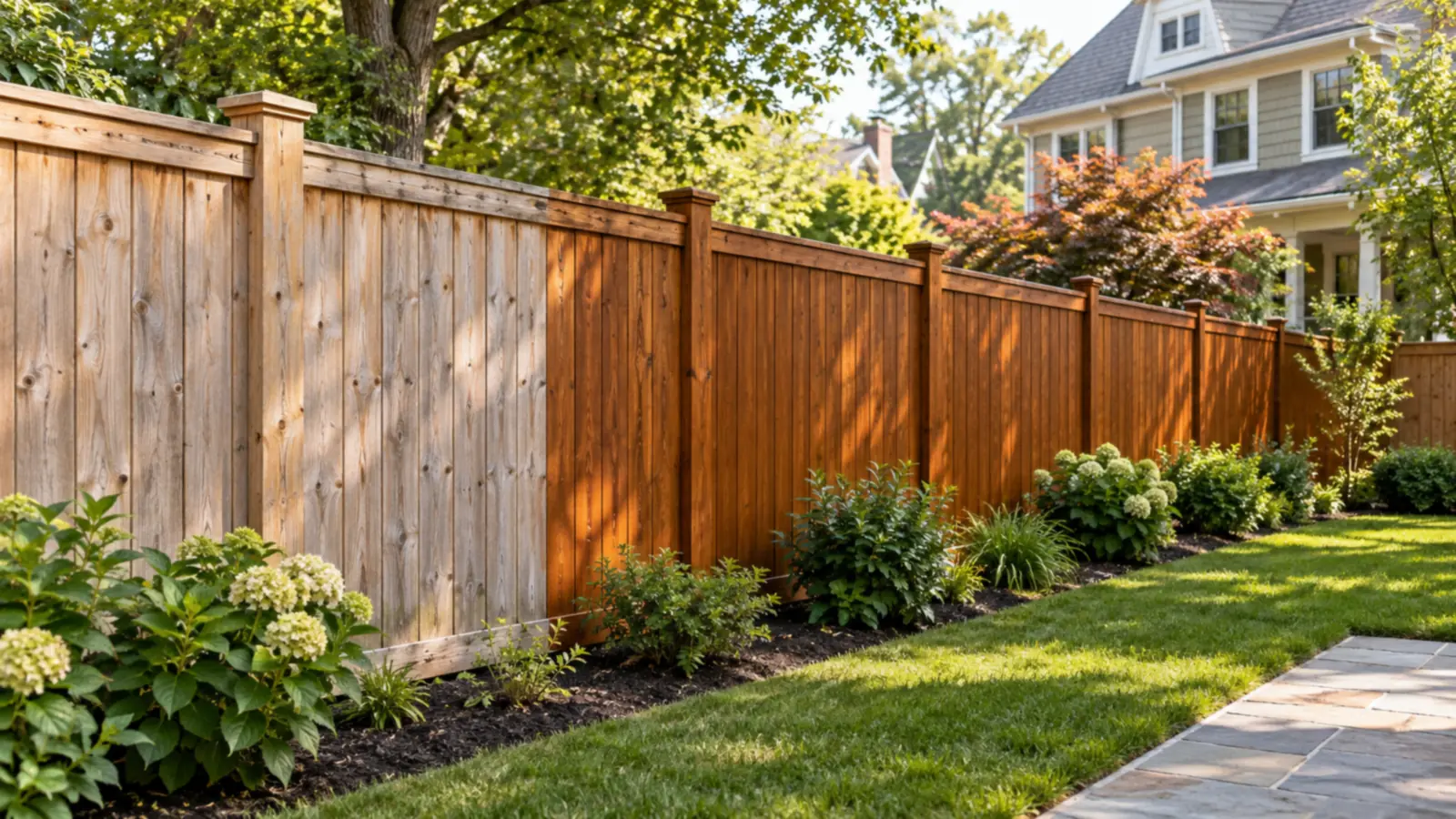
Wood fences and gates cleaned, fixed where boards are loose and stained or painted on one or both sides, to stop graying, peeling and early rot.
Get a fence painting quote
Fence painting and staining protects wood fences and gates with a cleaned, repaired and coated surface that slows graying, peeling and rot. Csiszer Property Maintenance, an insured handyman company serving Essex County and Union County, NJ, stains or paints one side or both, for homeowners and landlords.
It's cleaning, small repairs and a coat of stain or paint on fence boards, rails, posts and gates. It's one of our painting services, and it's what keeps a wood fence from aging faster than the rest of the yard.
A wood fence is exposed on every side, all year. Sun breaks down the surface fibers and turns them gray, rain soaks the bottoms of boards that sit close to soil or mulch, and New Jersey winters freeze whatever moisture is left in the wood. Without a coating, boards cup, split and pull away from their nails long before the posts give out.
The finish only works on clean, dry wood. Gray fibers, green growth on the shaded side and old peeling paint all have to be dealt with first, or the new coat comes off with them. We look at both sides when we review the job, because the side facing the sun and the side facing the trees often need different prep.
Semi-transparent or solid stain worked into boards, rails and posts along the grain.
Solid paint on picket and board fences where you want a clean color to match the house.
Gates stained or painted with the fence, with latches and hinges masked before coating.
Your side only, or both sides when the neighbor agrees and the other side is reachable.
Loose boards renailed and small split pieces fixed so the coating goes on a solid fence.
Recoating on a schedule so a fence that's in good shape stays that way through more winters.
A fence needs stain or paint when the wood turns gray, soaks up water or the old coating peels. These are the six signs we see most.
Gray boards are sun-damaged on the surface. They need cleaning before stain will soak in evenly.
Splash a board. If it soaks in right away instead of beading, the old protection has worn off.
Peeling paint traps water behind it. Loose paint is scraped before a new coat goes on.
Algae and mildew grow where the fence stays damp. They're cleaned off before any coating.
Dry, unprotected boards crack and curl. Small ones are fixed first; bad ones go to fence repair.
A patchy fence makes a yard look neglected to tenants and buyers. Fresh stain fixes it in one visit.
Our fence painting takes five steps: photos or a description, a review or a visit at no charge, a written quote, cleaning and small fixes, then stain or paint and cleanup.
Text or upload the approximate fence length and height, both sides if you can reach them, and close-ups of the worst boards and the gates.
We check the wood, the old coating, broken boards and what's growing on the shady side. If the photos show enough, we write the quote; if the job needs a closer look, we visit first, at no charge.
You get a written quote with the sides and the product. Approve it and we pick dry weekdays together based on the forecast.
The fence is cleaned and left to dry, loose boards fixed, and plants, cars and nearby siding protected from drips.
Boards, rails, posts and gates are coated section by section, post tops included, and the yard is cleaned up after.
Every fence painting job includes cleaning, minor board fixes, stain or paint on one or both sides, and the gates. The only things left out are jobs the law reserves for a licensed or certified pro.
Included
Not included: needs a licensed or certified pro
Broken posts, leaning sections and sagging gates are handled first under fence repair. Vinyl fences don't need paint; they're cleaned instead.
Fence painting cost depends on the fence length and height, one side or both, the condition of the wood and the picket or board style. Photos help us review the job, and the price is in writing before anything is scheduled.
Style changes the job as much as length. A solid board privacy fence is mostly flat surface, while a picket or shadowbox fence has gaps, edges and both faces of every picket to coat. Lattice tops and decorative caps add slow, detailed work.
Condition sets the prep. A fence stained a few years ago mostly needs cleaning and one coat; a fence with peeling paint needs scraping, and gray boards on the sunny side need more cleaning before stain soaks in evenly. Including the gates and both sides in one visit is usually the most efficient plan.
| Factor | How it affects the price | Example |
|---|---|---|
| Length and height | More fence face means more cleaning, product and time | A short side run vs. a full backyard |
| One side or both | Two sides doubles the coated area and the setup | Your side only vs. both with permission |
| Condition | Peeling paint, gray wood and growth add scraping and cleaning | Recently stained vs. gray and peeling |
| Picket or board style | Gaps, edges and shadowbox layouts add hand work | Solid privacy boards vs. spaced pickets |
| Gates and details | Gates, lattice and caps take longer than flat runs | No gate vs. two gates with lattice tops |
| Access | Plantings, slopes and tight side yards add setup time | An open lawn vs. a fence behind garden beds |
For how often to recoat, read how often to stain a fence in New Jersey. Painting inside too? See the cost to paint a room in NJ.
Most fence coatings fail at the bottoms, the tops and on wood that wasn't ready. Here's what to avoid, how to choose stain or paint, and how to get ready.
Six mistakes cause most fence stain failures: staining a fence that's still wet, coating over gray fibers, letting overspray drift, mulch piled against boards, skipped post tops and ends, and painting a fence you'll want to stain.
New or rain-soaked boards can't take stain. If water beads on the wood, it isn't ready yet.
Loose, sun-damaged fibers peel away with the stain. They're cleaned off first so the coat bonds.
Spray on a breezy day lands on cars, siding and the neighbor's yard. Brush and roller keep it on the fence.
Soil and mulch keep the bottoms wet, so they rot first. Pulling it back an inch or two helps them dry.
Post tops and cut board ends soak up the most water. They're coated along with the faces.
Paint is hard to go back from. Once a fence is painted, returning to stain means stripping it.
Stain soaks in and is easy to renew; paint gives solid color but has to be scraped when it fails. Our fence stain guide covers upkeep by wood type.
Six things that keep the day on schedule. Painting the house trim too? See our exterior painting service.
Choose us for fence painting because the wood is cleaned and fixed before any coating, your neighbors' property is respected, and the price is in writing first.
Fences and gates at homes, rentals and businesses are stained or painted by an insured handyman company.
You get a written quote before anything is scheduled, with the sides and the product spelled out.
Loose and split boards are fixed before coating, so the stain goes on a fence that's solid.
Only permitted sides are coated, and nearby cars, plants and siding are covered from drips.
Stain goes on during a dry, mild stretch, not on a day that happens to be open on the calendar.
Gates are stained or painted with the fence, with latches and hinges masked off first.
These are the questions people ask most before a fence is stained or painted. For work inside the house, see our interior painting service.
It depends on the fence length and height, one side or both, the condition of the wood and the picket or board style. Send photos or describe the job: if the photos show enough, you get a written quote; if it needs a closer look, we visit first, at no charge. Either way, the price is in writing before anything is scheduled.
Yes. Only the sides you have permission to reach are painted or stained. If the neighbor agrees, both sides can be done in the same visit.
It depends on sun exposure, the wood type and the product. A fence in full afternoon sun wears faster than one in shade. Our guide on how often to stain a fence in New Jersey explains the signs to watch.
Csiszer Property Maintenance, an insured handyman company serving Essex County and Union County, NJ, stains and paints fences once they're solid. Minor board fixes are part of the prep. Broken posts, leaning sections and bigger damage are fixed first under fence repair.
Vinyl fences don't need paint. They're cleaned instead, which removes the green film that grows on shaded sections.
Stain soaks in, shows the grain and is easier to renew; paint gives solid color but has to be scraped when it peels. Going from paint back to stain is hard, so the first choice matters most.
Yes. Gates are stained or painted with the fence, and latches and hinges are masked. A sagging or dragging gate is adjusted under fence repair first.
Usually after it dries out. New and pressure-treated boards can be too wet to take stain. Sprinkle water on a board: if it beads, wait; if it soaks in, it's ready.
It depends on what's nearby. Close to cars, houses and a neighbor's yard, brush and roller keep stain where it belongs. Either way, the stain is worked into the boards, not just laid on top.
A property survey shows the line, and a licensed land surveyor can mark it if you're not sure. We work only on the sides you own or have permission to reach.
Still have a question about your fence?
Send it with a photo. We answer by phone, text or email, Monday to Friday, 8 AM to 5 PM.
If the rooms inside, the house itself or the doors need paint too, one of these covers it in more detail.
Rooms, walls and ceilings painted, with patching and prep done first.
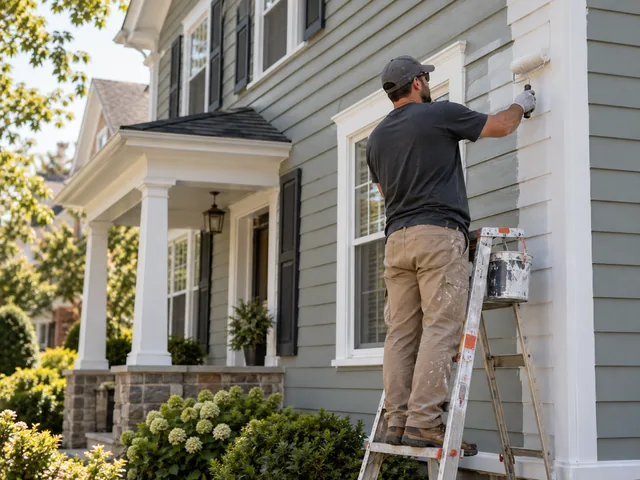
Siding, trim and porches scraped, primed and painted for NJ weather.
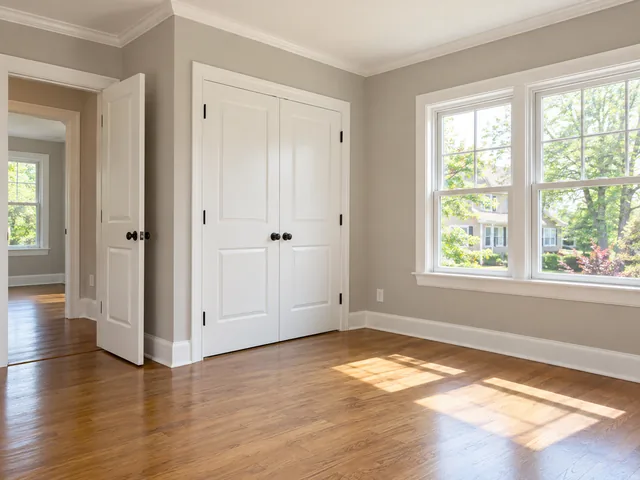
Interior doors, front doors and trim painted with a smooth, even finish.
Send the fence length, both sides if you can reach them, close-ups of the boards, or describe the job, and request your free fence painting quote. If the photos show enough, you get a written quote; if the job needs a closer look, we schedule a visit first, at no charge.
Request a fence painting quote