Window Painting
Frames, sashes and trim painted so the windows still open and close.
Serving Essex & Union County, NJ
Interior doors, front doors and matching trim sanded, primed and painted with a smooth, even finish, and no paint on the hinges or hardware.
Get a door painting quote
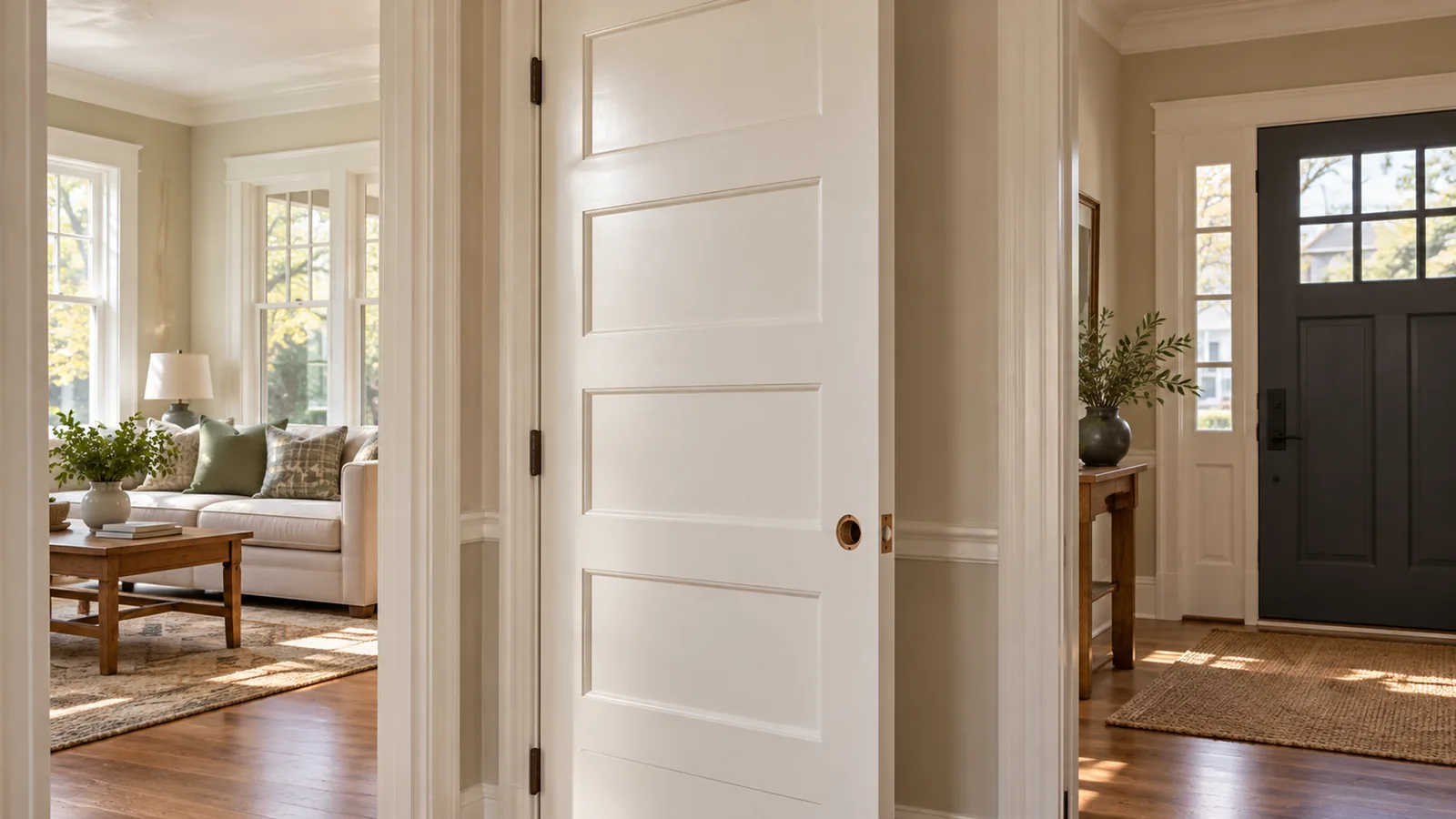
Door painting refinishes interior doors, front doors and the trim around them with sanding, primer and a durable brush and roller finish. Csiszer Property Maintenance, an insured handyman company serving Essex County and Union County, NJ, paints one door or every door in the house, for homeowners, landlords and sellers.
It's detailed painting for the surfaces you touch every day: door faces, edges, casings and baseboards. It's one of all painting services we offer, and it needs more prep than a wall.
Doors take more abuse than any wall. Hands, pets, vacuum cleaners and humidity all work on the paint, and every hinge and latch is a place for drips and buildup. A good finish comes from the order of work: hardware off or masked, surfaces cleaned and sanded, dents filled, primer where needed, then panels, rails and stiles painted in sequence so no lap marks dry into the finish.
In older Essex County homes, doors and trim often carry many layers of paint, and the bottom layers are frequently oil-based. Latex paint over oil peels unless the surface is sanded and primed with a bonding primer. That's why we check whether the old finish is oil or latex before quoting.
Flat and paneled doors sanded, primed where needed and painted on one or both sides.
Entry doors painted in exterior-grade products, with all edges sealed against moisture.
Door casings and jambs cleaned, caulked at the gaps and painted to match the door.
Baseboards scuffed, filled and painted in a hard sheen that wipes clean after vacuuming.
Knobs and strikes removed, hinges masked, and everything reinstalled when the paint is dry.
Dark doors lightened or white doors turned to a color, with primer so the old shade doesn't show.
Doors need painting when marks stop washing off, the edges chip or the color no longer suits the rooms around them. These are the six signs we see most.
A gray halo around knobs that won't wash off means the finish has worn through to a porous layer.
White oil paint yellows over time, especially in dim halls. Latex over it needs sanding and a bonding primer.
Pets, vacuums and furniture chip the lower edges first. Filling and priming comes before new paint.
Sun on the entry breaks down paint fast. A peeling front door lets water into the wood or the steel skin.
After a room is repainted, dull or off-white doors and trim stand out. Painting them finishes the room.
Fresh doors and trim are one of the fastest ways to make a house look cared for in photos and showings.
Our door painting takes five steps: photos or a description, a review or a visit at no charge, a written quote, prep with hardware off, then paint, reassembly and cleanup.
Text or upload photos of each door, a close-up of the hardware, the color you want and whether the trim is part of the job.
We check panel style, paint buildup, oil or latex, and how the door swings. If the photos show enough, we write the quote; if the job needs a closer look, we visit first, at no charge.
You get a written quote with the number of doors and sides. Approve it and choose a weekday between 8 AM and 5 PM.
Hardware is removed or masked, dents and chips filled, surfaces sanded and primed where the old finish needs it.
Panels, rails and stiles are painted in order, the hardware goes back on once it's dry, and the area is cleaned up.
Every door painting job includes hardware removal or masking, sanding and filling, primer and a brush and roller finish. The only things left out are jobs the law reserves for a licensed or certified pro.
Included
Not included: needs a licensed or certified pro
Door painting cost depends on the number of doors, paneled or flat, one side or both, and whether the trim is included. Photos help us review the job, and the price is in writing before anything is scheduled.
A six-panel door takes far longer than a flat slab, because every panel edge is brushed by hand and has to be painted in the right order. Doors with heavy buildup, drips or oil paint underneath need more sanding and a bonding primer before the finish coats.
Painting several doors in one visit is where the value is. Doors and casings in the same color and sheen can be prepped together and painted in rounds while each coat dries, so grouping every door on a floor usually beats doing one or two at a time.
| Factor | How it affects the price | Example |
|---|---|---|
| Number of doors | More doors in one visit spread prep and drying time across more work | One door vs. every door upstairs |
| Panel or flat | Raised panels need hand brushing along every edge | A flat slab vs. a six-panel door |
| One or both sides | Two sides doubles the painted area and the drying rounds | Hall side only vs. both faces |
| Trim included | Casings, jambs and baseboards add detailed brush work | Door only vs. door and casing |
| Existing finish | Oil paint, drips and buildup need extra sanding and bonding primer | Recent latex vs. decades of layers |
| Interior or entry door | Entry doors need exterior products and weather-aware timing | A closet door vs. the front door |
For per-door numbers, read the cost to paint interior doors and trim. Painting the rooms too? See the cost to paint a room in NJ, with prep and repairs.
Most door paint problems come from the order of work, the wrong primer or closing the door too soon. Here's what to avoid, when to paint or replace, and how to get ready.
Six mistakes cause most door paint problems: painting over the hinges, latex over old oil paint, the wrong order on panels, skipped top and bottom edges, too much paint on the edges and closing the door too soon.
Paint on hinges and strikes cracks as the door moves. Hardware comes off or gets masked first.
Water-based paint peels off oil. Sanding and a bonding primer make the new coat grip the door.
Painting stiles before panels leaves lap marks. Panels first, then rails, then stiles keeps it even.
Unsealed edges on entry doors take in moisture and swell. All six sides get paint on exterior doors.
Thick edges rub the jamb and stick. Thin coats on the edges keep the door closing freely.
Paint that feels dry can still stick to the stop. The door stays open until the paint firms up.
Paint when the door is solid and swings well; replace it when it's warped, split or delaminating. New doors are hung under door installation.
Six small things that make the day faster. Adding windows? See our window painting service.
Choose us for door painting because the prep is done properly, the hardware stays clean, and you see the price in writing first.
Doors across the house are painted by an insured handyman company, in homes and rentals.
Each door, one side or both, and its trim go on one written quote before work starts.
Hardware is removed or masked before sanding, so there's no paint on knobs, hinges or strike plates.
Edges are kept thin and doors dry open, so they swing and latch the way they did before paint.
Old oil finishes and heavy buildup are sanded and given a bonding primer, so the new paint doesn't peel.
A brush for panel edges and a fine roller for flat parts, with no spray drifting through the house.
These are the questions people ask most before their doors are painted. Outside wood too? See deck staining and fence painting.
It depends on the number of doors, whether they're paneled or flat, one side or both, and whether the trim is included. Send photos or describe the job: if the photos show enough, you get a written quote; if it needs a closer look, we visit first, at no charge. Either way, the price is in writing before anything is scheduled. Our guide on the cost to paint interior doors and trim explains what raises or lowers the total.
Sometimes, for the best finish. Doors with heavy buildup or detailed panels often come off and lie flat; others are painted in place. You'll know which before work starts.
Hardware is removed or masked before any sanding or paint. Knobs and strike plates usually come off; hinges are taped if the door stays hung.
Yes. The paint name and sheen from the can or receipt is best. Without it, a small sample or a clear photo in daylight helps get close.
Doors get a brush and roller finish: a brush for the panel edges and a fine roller for the flat parts. Done in the right order, it leaves a smooth, even surface with no overspray drifting around the house.
Yes. Front doors get exterior-grade primer and paint, and the top and bottom edges are sealed too, so moisture doesn't swell the door. Weatherstripping is protected so the door still closes tight.
Yes, but the cause is handled first. A door that rubs because of paint buildup is sanded down at the edges; one that sticks because of loose hinges or a shifted frame is adjusted under door repair before it gets paint.
Usually because it was closed before the paint cured, or layers of old paint built up on the edges. Edges are kept thin and the door is left open while it dries. If it sticks for other reasons, door repair adjusts it.
Csiszer Property Maintenance, an insured handyman company serving Essex County and Union County, NJ. Casings, baseboards and trim can be painted in the same visit, in the same color and sheen as the doors, so everything matches.
No. Lock work requires a licensed locksmith in New Jersey, so we remove and reinstall your existing hardware only. Changing or rekeying locks goes to a licensed locksmith.
Still have a question about your doors?
Send it with a photo. We answer by phone, text or email, Monday to Friday, 8 AM to 5 PM.
If the windows, the deck or the fence needs paint too, one of these covers it in more detail.
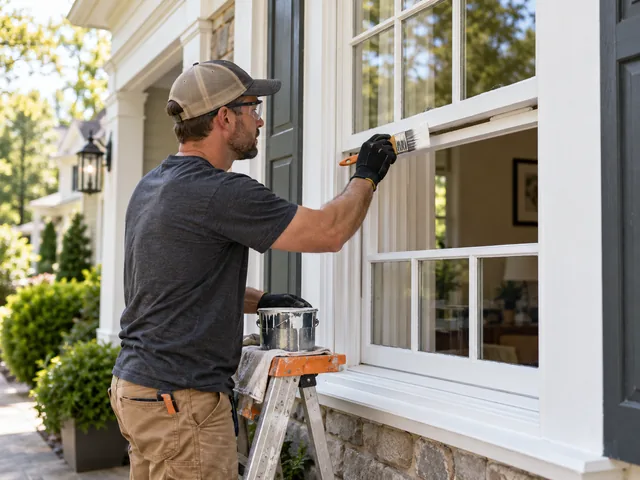
Frames, sashes and trim painted so the windows still open and close.
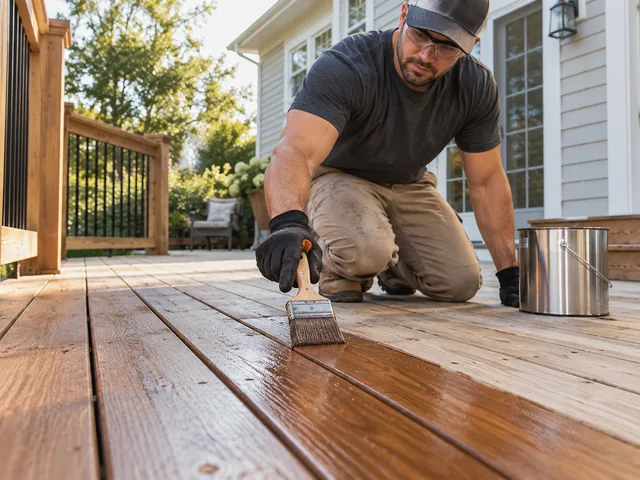
Decks cleaned, prepped and stained or painted to get through winter.
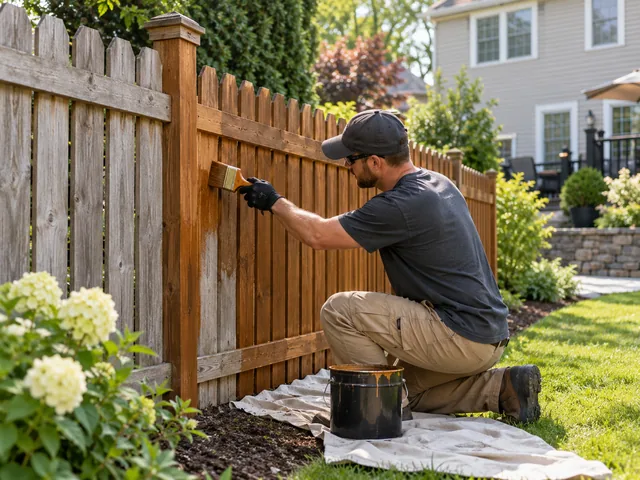
Wood fences stained or painted to stop graying, peeling and early rot.
Send photos of the doors, the hardware and the color you want, or describe the job, and request your free door painting quote. If the photos show enough, you get a written quote; if the job needs a closer look, we schedule a visit first, at no charge.
Request a door painting quote