Drywall Repair
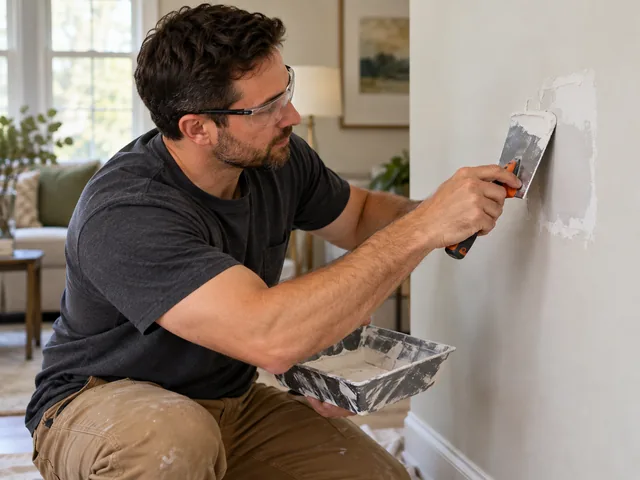
Our drywall repair service patches holes, dents and nail pops for paint.

Serving Essex & Union County, NJ
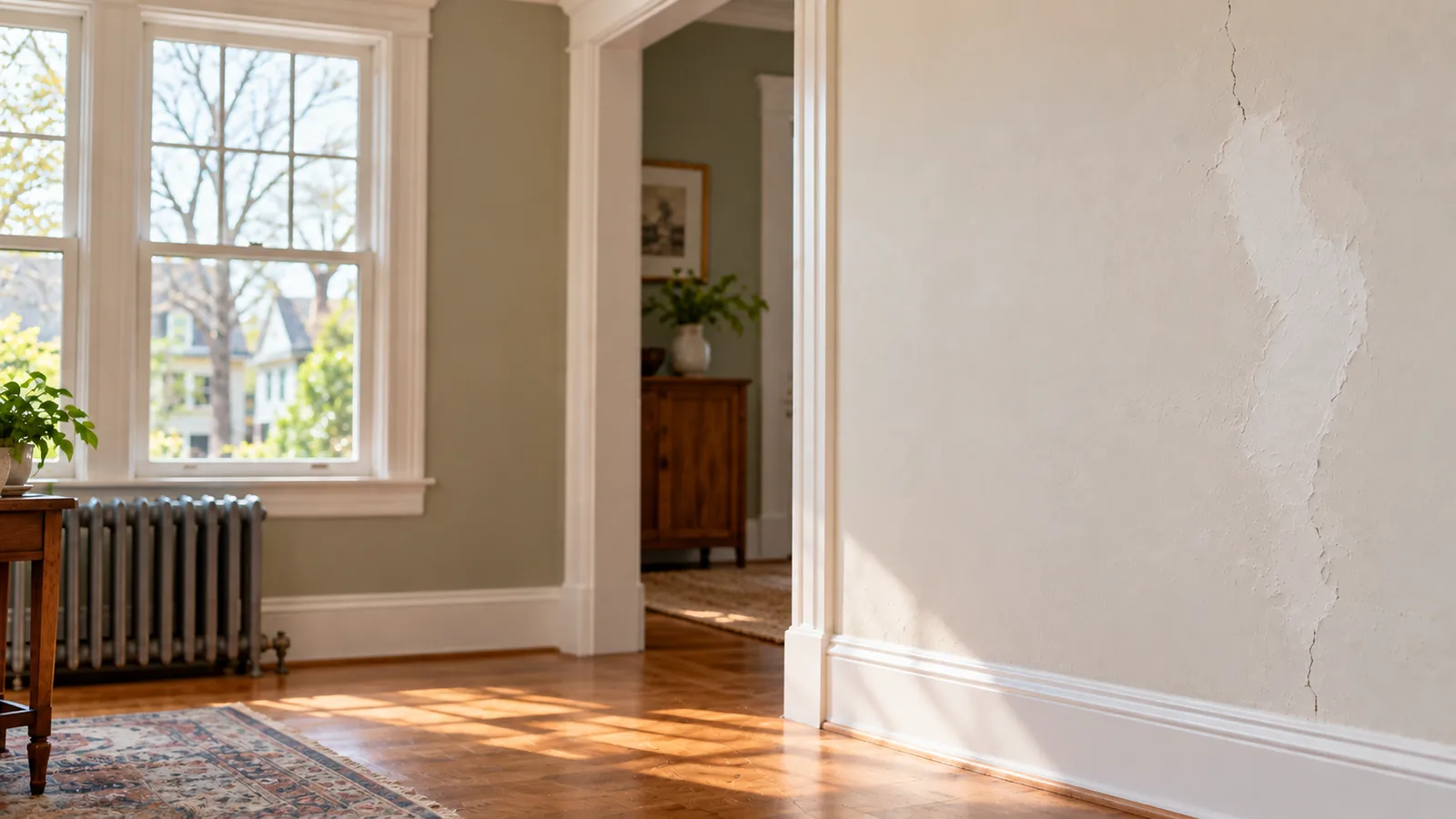
Cracks, holes and loose plaster repaired in the walls and ceilings you already have, stabilized first so the crack doesn't come back, and finished smooth for paint.
Get a plaster repair quote
Plaster repair fixes cracks, holes and loose plaster in older walls and ceilings without tearing them out. Csiszer Property Maintenance, an insured handyman company serving Essex County and Union County, NJ, does it for homeowners and landlords in older houses, where plaster is common and is repaired differently from drywall. Cracks are stabilized first, then patched, skim-coated where needed and primed.
Plaster repair secures cracked or loose plaster back to its lath, fills the damage with materials that bond to old plaster, and blends the surface so it reads as one wall. It sits alongside the drywall services we offer, but uses different methods and materials.
Traditional lath and plaster was troweled over thin wood strips in coats. The first coat squeezed between the strips and hardened into "keys" that hold the whole wall in place. Most plaster problems start when those keys break: from settling, from a leak, or from decades of seasonal movement between dry winter heat and humid New Jersey summers. Once enough keys let go, the plaster cracks, bulges or sounds hollow when you tap it.
That's why a lasting plaster repair starts behind the surface. Loose plaster is drawn back to the lath before anything is patched, and cracks are bridged with mesh tape so they can't reopen along the same line. A crack filled with spackle alone usually comes back within a season, because the plaster on each side is still moving.
Cracks opened, secured on both sides and bridged with mesh tape before they're filled.
Plaster pulling away from the lath drawn back with plaster washers or adhesive where possible.
Holes and missing sections rebuilt in layers so the patch sits flush with the old wall.
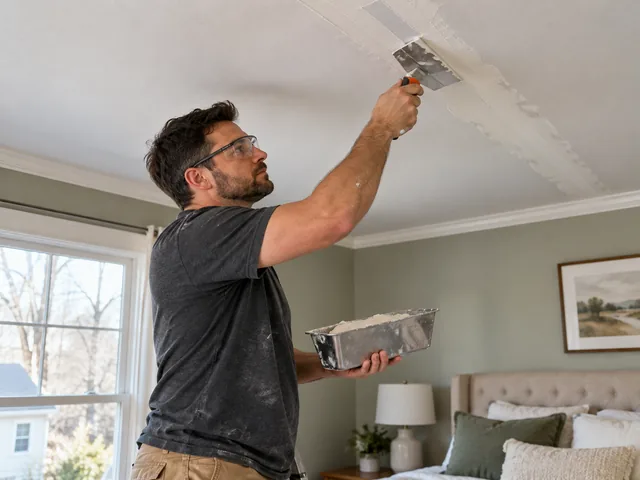
Cracked or sagging plaster ceilings secured first, then patched and finished overhead.
A thin coat over a cracked or patchy wall so repairs and old plaster read as one surface.
Primer seals new material and old plaster so paint covers evenly and doesn't flash.
You need plaster wall repair when cracks spread, the wall bulges or sounds hollow, or pieces start to fall. These are the six signs we see most in older homes.
A web of fine cracks usually means the finish coat is loosening and the wall needs securing and a skim coat.
Cracks running from the corners of doors and windows come from settling and return unless they're stabilized.
A soft bulge or a hollow tap means the keys behind the plaster broke. It can often be re-attached.
A dip in a plaster ceiling can be heavy. Keep the room clear and have it secured before any patching.
Plaster that got wet can turn soft and powdery. The leak is fixed first, then the section is rebuilt.
A patch that cracks every winter was usually filled but never secured. It can be redone properly.
Our plaster repair takes five steps: photos or a description, a review, a written quote, stabilizing and patching, and skim coat, primer and cleanup.
Text or upload a close-up of the crack and the whole wall, or describe it, and mention any past leaks in that area.
We check how much plaster is loose and whether a crack looks structural. If the photos show enough, we quote from them; if not, we visit at no charge and tap-test the wall.
You get a written quote before anything is booked. Approve it and choose a weekday between 8 AM and 5 PM.
Loose plaster is drawn back to the lath, cracks are bridged with mesh tape, and holes are rebuilt in layers until they sit flush.
The surface is skim-coated where needed, sanded, primed and ready for paint, and the debris is cleaned up before we leave.
Every plaster repair includes stabilizing, patching and primer. What's left out is work that needs a licensed trade or a structural engineer.
Included
Not included: needs a licensed pro
Plaster repair cost depends on the length and depth of the cracks, the size of loose areas, skim coat or spot repair, and whether it's a wall or a ceiling. Photos help us review the job, and the price is in writing before anything is scheduled.
Plaster work is priced by the job. The biggest variable is what's behind the surface: a hairline crack on solid plaster is a quick repair, while a wall that sounds hollow across several feet needs securing before any patch. A wall with many cracks often costs less to skim-coat as a whole than to patch crack by crack, and it looks better afterward.
Ceilings take more setup than walls. The work is done overhead, and a sagging plaster ceiling has to be secured before anything else, so the same crack costs more to fix above your head than at eye level.
| Factor | How it affects the price | Example |
|---|---|---|
| Crack length and depth | Long or deep cracks need more securing, tape and fill | A hairline crack vs. a crack across the wall |
| Size of loose areas | Hollow-sounding plaster has to be re-attached before patching | A solid wall vs. a bulging section |
| Skim coat or spot repair | A skim coat covers the whole wall; spot repairs treat each crack | Two cracks vs. spiderweb cracking |
| Access and furniture | Tall stairwell walls and heavy furniture add setup time | A cleared bedroom wall vs. a stairwell wall |
| Wall or ceiling | Ceilings need securing and more setup overhead | A hallway wall vs. a bedroom ceiling |
| Missing sections | Holes to the lath are rebuilt in layers | A crack vs. a hole left by an old fixture |
Not sure what your walls are made of? Start with our guide plaster or drywall.
Most plaster repairs fail because the surface was filled while the plaster behind it was still loose. Here's what to avoid, when to repair or replace, and how to get ready.
Six mistakes cause most failed plaster repairs: filling without securing, spackle in a deep crack, paper tape instead of mesh, tearing out a whole wall, skipping primer on patches and ignoring an old leak.
If the plaster on each side of a crack is loose, any filler cracks again. Securing comes first.
Lightweight spackle shrinks in deep plaster cracks. Deep damage is filled in layers with a setting compound.
Plaster cracks move, and mesh tape embedded in compound bridges them better than a surface fill.
Demolition spreads heavy dust and mess through the house. Most walls can be kept and repaired.
New compound and old plaster absorb paint differently. Without primer, the patch shows through the paint.
Plaster that crumbled from water will crumble again if the source isn't fixed and dry first.
Repair when most of the plaster is still bonded to the lath; replace when large areas have let go or the wall is being opened anyway. Replacement sections are handled by our drywall installation service.
Six things that make the visit smoother. If a crack is wide or growing, read our guide on wall cracks and when to worry first.
Choose us for plaster repair because we secure the plaster before patching, we keep your original walls, and you see the price in writing first.
Cracks, holes and loose plaster in older walls and ceilings are repaired by an insured handyman company.
A few cracks are repaired one by one; spiderweb cracking across a wall usually gets a full skim coat.
Loose plaster is re-attached and cracks are bridged first, so the repair holds through the seasons.
Repair comes before replacement, so you keep the walls and trim that make an older home what it is.
Patches are feathered and skim-coated where needed, so the repair reads as one wall under paint.
A sagging plaster ceiling can be heavy, so it's secured before anything else is patched.
These are the questions owners of older homes ask most before a plaster repair. For drywall work, see all our drywall services.
Not always. Repairing plaster keeps the original walls, avoids a dusty tear-out and is usually less disruptive. Replacement makes sense when large areas have lost their grip on the lath or the wall is being opened anyway.
It depends on how many cracks there are. A few cracks are repaired one by one; spiderweb cracking across a wall usually costs less and looks better with a skim coat over the whole surface.
Cracks are stabilized before patching, by securing the plaster on both sides and embedding mesh tape, which reduces the chance of them returning. Cracks that keep moving after a repair need a structural engineer.
It depends on the length and depth of the cracks, the size of any loose areas, and whether the wall needs a skim coat or a spot repair. Send photos, or describe the job: if the photos show enough, you get a written quote; if not, we schedule a visit first, at no charge. Either way, the price is in writing before anything is scheduled.
Plaster is hard, cold and solid, and a pushpin barely goes in. Drywall sounds hollow and takes a pin easily. Plaster is common in homes built before the 1950s, and our Plaster or Drywall guide walks you through a few quick checks.
Often, yes. If the plaster is still in one piece, it can be drawn back to the lath with plaster washers or adhesive, then the surface is patched. Plaster that has crumbled or fallen is cut out and rebuilt instead.
Csiszer Property Maintenance, an insured handyman company serving Essex County and Union County, NJ. Plaster ceilings crack and sag for the same reasons as walls, but a sagging plaster ceiling can be heavy, so it's secured before anything else. Ceilings that are mostly loose may be better replaced with drywall.
Yes, for smooth and most hand-troweled finishes. The patch is feathered and, when needed, the wall gets a thin skim coat so the repair and the old plaster read as one surface under paint.
Yes, but plaster needs different anchors than drywall and a careful drill to avoid cracking. Mention it in your request and it can be planned into the same visit.
Mostly from decades of settling, seasonal swings between dry winter heat and humid New Jersey summers, and old leaks. Over time the plaster keys that grip the lath break, and the plaster starts to crack and loosen.
Still have a question about your plaster?
Send it with a photo or a short description. We answer by phone, text or email, Monday to Friday, 8 AM to 5 PM.
If the wall or ceiling is drywall, or a section needs new board, one of these fits better.
Our drywall repair service patches holes, dents and nail pops for paint.
A drywall ceiling repair service for cracks, holes and small sags.
Drywall hung, taped and finished for rooms, closets and replacement sections.
Send photos or describe the job, with the age of the house, and request your free plaster repair quote. We review it: if the photos show enough, you get a written quote; if the plaster needs a closer look, we schedule a visit first, at no charge.
Request a plaster repair quote