Drywall Ceiling Repair
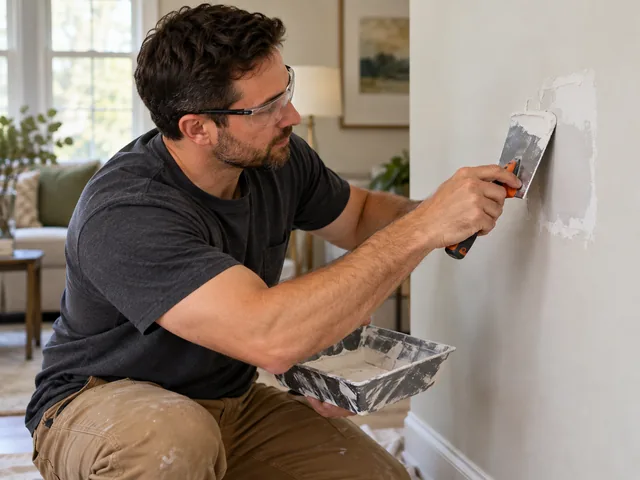
Ceiling cracks, holes and small sags repaired and blended into the texture.

Serving Essex & Union County, NJ
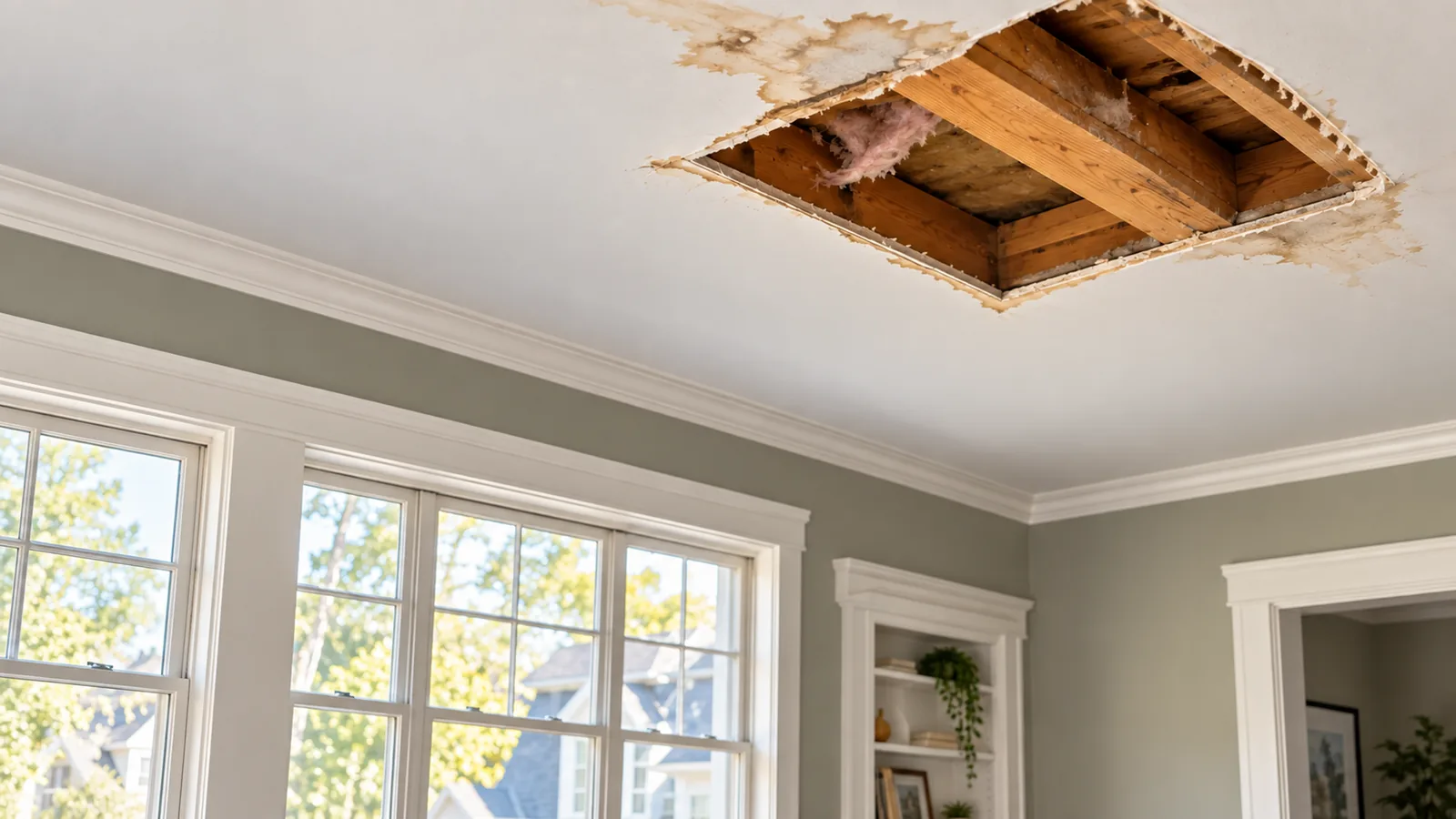
Stained, soft or crumbling drywall cut out and replaced once the source is fixed, with moisture checked before anything is closed and a stain-blocking primer under the paint.
Get a water damage drywall repair quote
Water damage drywall repair replaces stained, soft or crumbling drywall after the leak is fixed and the area is dry, then finishes and seals it so the stain can't come back. Csiszer Property Maintenance, an insured handyman company serving Essex County and Union County, NJ, does it for homeowners, landlords and businesses. Moisture is checked before the wall or ceiling is closed.
Water damage drywall repair cuts out drywall that water has softened or stained, confirms the framing is dry with a moisture meter, and installs, tapes and finishes new board. It's part of our wall and ceiling repair services and always comes after the plumber or roofer.
Drywall is gypsum wrapped in paper, and both parts react badly to water. The paper face can grow mold, and the gypsum core loses strength and crumbles when it stays wet. A stain that's dry and firm can often be sealed and painted. A section that's soft, bulging or sagging has to come out, because no primer can make wet gypsum strong again.
Timing matters more than most people think. The EPA advises drying water-damaged areas within 24 to 48 hours to prevent mold growth, and notes that porous materials like ceiling tiles may have to be thrown away if they become moldy. That's why the first call is to stop the water, and the drywall repair follows once everything behind it is dry.
Drywall and framing tested with a moisture meter before anything is closed up.
Soft, stained or crumbling drywall cut back to solid board and replaced with new panels.
Soaked insulation behind the opened section removed and replaced before closing.
New seams taped, coated with joint compound and sanded to blend with the surface.
Water stains sealed with a stain-blocking primer so they don't bleed through new paint.
The repaired area painted to match, or the full ceiling or wall repainted on request.
You need water damage drywall repair when drywall is stained, soft, bulging or peeling after a leak. These six signs tell you what kind of repair to expect.
A water stain ceiling repair may only need primer and paint if the drywall behind it is dry and firm.
Soft or spongy board has lost its strength and has to be cut out and replaced, not painted.
A dip below a bathroom or under the roof means water is sitting in or on the drywall. Stop the source first.
Blisters in the paint often mean moisture is trapped behind it, even if the surface looks dry.
Stains near outside walls after snow often point to ice dams at the roof edge, a job for a roofer first.
A musty smell or dark speckles on the drywall can mean mold. The size of the area decides who handles it.
Our water damage drywall repair takes five steps: photos or a description, a moisture review, a written quote, cut-out and replacement, and primer, paint and cleanup.
Text or upload the stain, the area above it and any soft spots, or describe them. Tell us who fixed the leak and when.
We look at how far the damage spread and whether the area is dry. If the photos show enough, we quote from them; if not, we visit at no charge and check with a moisture meter.
You get a written quote before anything is booked. Approve it and choose a weekday between 8 AM and 5 PM.
Damaged drywall is cut back to solid board, framing and insulation are checked, and new drywall is installed, taped and finished.
Stains get a stain-blocking primer, the area is painted to match if you asked for it, and the debris is cleaned up before we leave.
Every water damage drywall repair includes the moisture check, the replacement and a stain-blocking finish. The leak itself and larger mold or asbestos work go to the right licensed or certified pro.
Included
Not included: needs a licensed or specialized pro
Water damage drywall repair cost depends on the size of the damaged area, ceiling or wall, insulation replacement and paint matching. Photos help us review the job, and the price is in writing before anything is scheduled.
A dry stain on solid drywall is the simplest case: primer and paint. Once the board is soft, the repair becomes a replacement, and the price follows the size of the opening, whether it's overhead and what's found behind it, like wet insulation or a stained joist that needs sealing.
If you're filing an insurance claim, ask for photos and an itemized invoice when you request the quote. Your insurer decides what's covered; the paperwork just makes the claim easier to document.
| Factor | How it affects the price | Example |
|---|---|---|
| Size of the damaged area | Larger openings need more board, tape, compound and finishing | A small stain vs. a sagging section |
| Ceiling or wall | Ceilings take more setup and are harder to finish flat | A wall behind a sink vs. a kitchen ceiling |
| Insulation replacement | Soaked insulation has to come out and be replaced | An interior ceiling vs. a top-floor ceiling |
| Seal only or replace | Dry, solid drywall can be sealed; soft drywall is replaced | A dry stain vs. crumbling board |
| Paint matching | Touch-ups are quicker; faded paint may need the whole surface | A spot vs. the full ceiling |
| Texture | Textured ceilings take extra steps to blend | Smooth vs. knockdown |
Just found the stain? Read what to do first about a water stain on the ceiling before you call anyone.
Most stains come back because the repair happened too soon or too shallow: the leak wasn't fixed, the framing was still wet or the wrong primer went on. Here's what to avoid.
Six mistakes cause most repeat water damage repairs: repairing before the leak is fixed, closing wet framing, regular paint over a stain, cutting only the visible stain, leaving wet insulation and waiting weeks to act.
New drywall over an active leak stains again. The plumber or roofer has to finish first.
Studs and joists hold water long after the surface feels dry. A moisture meter check comes first.
Water stains bleed through ordinary paint. A stain-blocking primer has to seal them first.
Water spreads past the stain line. The cut goes back to solid, dry board on every side.
Soaked insulation holds moisture against the framing and new drywall, inviting mold.
The EPA advises drying within 24 to 48 hours. The longer drywall stays wet, the more has to come out.
Seal and paint when the drywall is dry and firm; replace it when it's soft, sagging or moldy. Small cracks around an old stain can be handled as ceiling crack repair, and small wall spots as a drywall patch.
Where the stain sits usually points to the source, and the source decides who you call first. Plaster ceilings in older homes follow the same order before our plaster repair service: stop the water, dry it, then repair.
Six things that make the repair faster and your claim easier. For cracks or damage elsewhere, check wall cracks when to worry.
Choose us for water damage drywall repair because we check moisture before closing anything, one insured team finishes the job, and the price is in writing first.
Damaged drywall is cut out, replaced, finished and sealed by an insured handyman company, in homes and rentals.
The cut goes back to solid, dry board on every side, because water spreads past the stain line.
Drywall and framing are checked before anything is closed, so the stain doesn't return next month.
Photos and an itemized invoice make it easier to document the repair with your insurer.
If the leak isn't fixed yet, you hear who to call first, so you don't pay for a repair twice.
A stain-blocking primer goes on before regular paint, so the water stain doesn't bleed back through.
These are the questions people ask most after a leak. For other wall and ceiling work, see all our drywall services.
The person who can stop the water: a licensed plumber for pipes and fixtures, a roofer for the roof. Water damage drywall repair comes after the source is fixed and the area has dried.
Only if the drywall is dry and solid. A stain-blocking primer goes on first so the stain doesn't bleed back through, then regular paint. If the drywall is soft or crumbling, that section is replaced instead.
That depends on your policy and the cause of the leak, so check with your insurer. We can provide photos and an itemized invoice for your claim, but we don't adjust or negotiate claims.
It depends on the size of the damaged area, whether it's a ceiling or a wall, whether insulation has to be replaced and how much paint matching is needed. Send photos or describe the job: if the photos show enough, you get a written quote; if not, we schedule a visit first, at no charge. Either way, the price is in writing before anything is scheduled.
The area is checked with a moisture meter before the wall or ceiling is closed, including the framing behind it. Drywall can feel dry on the surface while the back and the studs are still wet.
There can be, especially if the area stayed wet for more than a day or two. The EPA advises drying water-damaged areas within 24 to 48 hours to prevent mold. Small surface spots are cut out with the drywall; larger growth goes to a mold remediation company.
A stain near an outside wall that shows up after snow is often an ice dam: melting snow refreezes at the roof edge and backs water under the shingles. A roofer handles the cause, then the ceiling is repaired.
Csiszer Property Maintenance, an insured handyman company serving Essex County and Union County, NJ. When insulation is part of the section being opened, soaked batts behind a ceiling or wall are replaced before the new drywall goes up, because wet insulation holds water against the framing.
Yes, but plaster is handled differently from drywall, so it goes through our plaster repair service. Loose, swollen plaster may be re-attached or replaced in sections depending on how much bond it lost.
Keep people out of the area below and call a plumber or roofer to stop the water right away. A wet, sagging ceiling can hold a lot of water. Once the source is fixed, request a quote and the damaged section is replaced.
Still have a question about your leak damage?
Send it with a photo or a short description. We answer by phone, text or email, Monday to Friday, 8 AM to 5 PM.
If the damage is a crack, a small hole or an old plaster wall, one of these fits better.
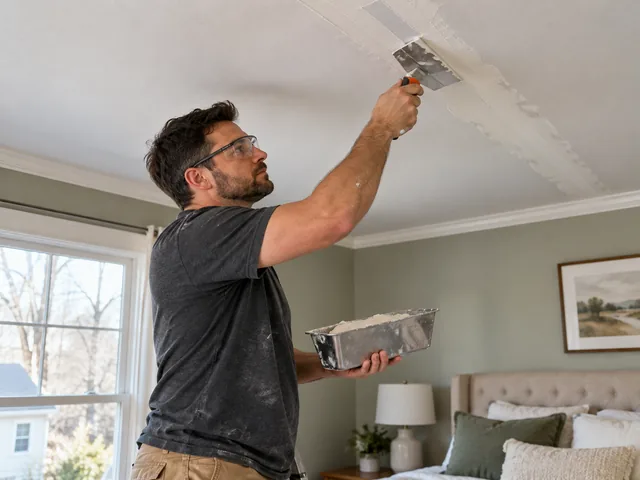
Ceiling cracks, holes and small sags repaired and blended into the texture.
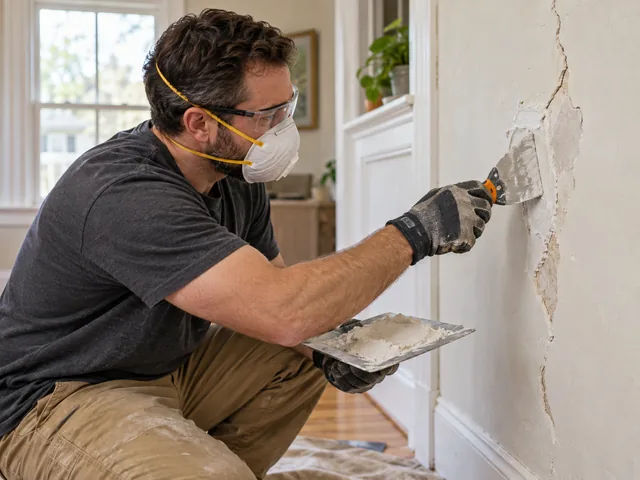
Holes, dents, cracks and nail pops patched, textured and primed for paint.
Cracked and loose plaster in older homes repaired without tearing out walls.
Send photos of the stain or describe the damage, and request your free water damage drywall repair quote. We review it: if the photos show enough, you get a written quote; if it needs a closer look, we schedule a visit first, at no charge.
Request a water damage drywall repair quote