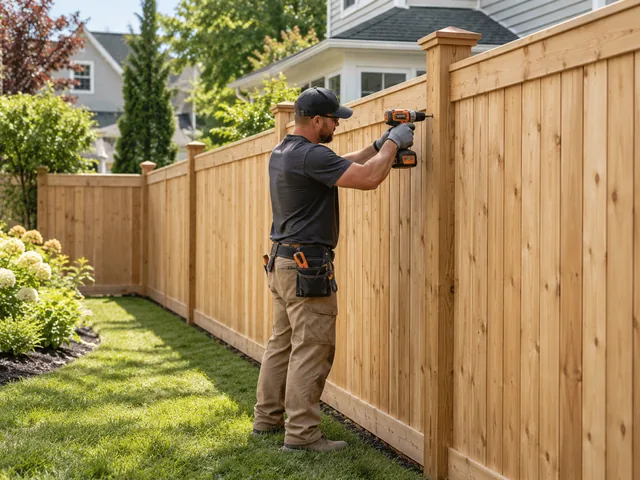
Fence Repair
Leaning posts, broken panels and sagging gates fixed after storms and frost.

Serving Essex & Union County, NJ
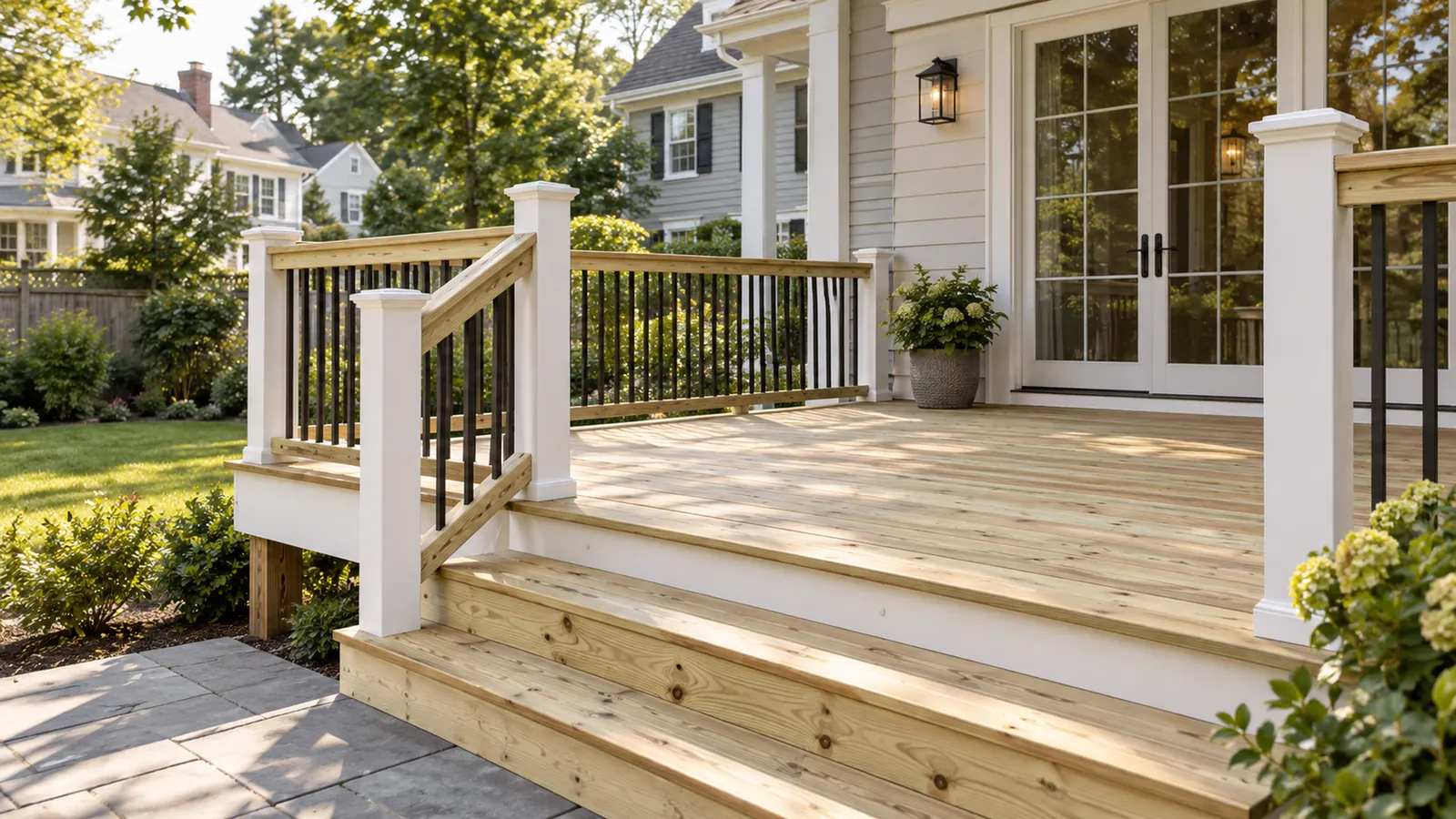
Rotted boards, loose railings and wobbly stairs replaced or reinforced, with the visible framing checked before small problems turn into safety issues.
Get a deck repair quote
Deck repair replaces rotted boards, fixes loose railings and rebuilds wobbly stairs so the deck is solid and safe to use again. Csiszer Property Maintenance, an insured handyman company serving Essex County and Union County, NJ, repairs decks for homeowners, landlords and sellers, from a few soft boards to a full season's worth of winter damage. The visible framing is checked on every job.
Deck repair is replacing or reinforcing the parts of a deck that have rotted, loosened or cracked, from boards and railings to stair treads and stringers. It's one of our exterior home repair services, focused on keeping an existing deck safe rather than building a new one.
Most deck damage in New Jersey comes from water that doesn't dry. Snow sits on the boards for weeks, freeze-thaw cycles pop screws and nails, and the ends of boards and the tops of posts soak up water until wood decay sets in. By spring, a deck that looked fine in October has soft spots by the steps, a railing post that rocks and a stair tread that flexes.
A lasting repair starts underneath. Before new boards go down, the joists they sit on are checked, because a new board screwed into a soft joist fails again within a season or two. Fasteners rated for treated lumber, a small gap between boards for drainage and solid blocking at railing posts are what make a repair outlast the next winter.
Rotted, split or cupped boards cut out and replaced over the joists.
Loose posts re-fastened or reinforced, and broken rails and balusters replaced.
Loose treads fastened, and cracked or rotted stringers repaired or replaced.
Popped nails and rusted screws swapped for fasteners rated for treated wood.
Soft spots located and cut out before rot spreads into the boards around them.
Joists, beams and posts that can be reached are checked for rot and loose connections.
You need deck repair when a board feels soft, a railing moves or the stairs flex under your weight. These are the six signs we see most after a New Jersey winter.
A soft or bouncy board usually means rot in the board or the joist below it.
If the railing moves when you push it, repair it before anyone leans on it.
Loose treads or a cracked stringer make the stairs the most dangerous part of a deck.
Freeze-thaw pushes fasteners out. Raised heads catch bare feet and let water in.
Board ends and post tops soak up water first, and that's where wood decay starts.
Home inspectors often flag soft boards and loose railings, and buyers notice them too.
Our deck repair takes five steps: photos or a description, a review of the damage and framing, a written quote, the repair and a final walk.
Text or upload a photo of the whole deck, close-ups of damaged boards, the railings and stairs, and the framing underneath if you can reach it, or simply describe the damage.
We look at how far the damage goes and whether the framing is involved. If the photos show enough, you get a written quote; if not, we schedule a visit to probe the wood first, at no charge.
You get a written quote before anything is booked. Approve it and choose a weekday between 8 AM and 5 PM.
Damaged boards, rails or treads come out, the joists and posts below are checked, and new wood goes in with rated fasteners.
Railings are pushed, stairs are walked, loose fasteners are reset, and old wood and debris are cleaned up.
Every deck repair includes the replacement or reinforcement, rated fasteners and a check of the visible framing. Structural rebuilds and licensed work are left out.
Included
Not included: structural rebuilds and licensed work
Deck repair cost depends on the number of boards, the railing length, how closely the wood has to match and how easy the deck is to reach. Photos help us review the job, and the price is in writing before anything is scheduled.
Deck repairs are quoted by the job, so the price covers removal, new wood, fasteners, the framing check and cleanup. The number of boards and the length of railing drive most of it. Stairs are their own line, because stringers and treads take careful fitting to sit level.
Matching and access change the rest. Standard pressure-treated boards are easy to source; older or unusual board sizes take more work to match. A low deck off the kitchen is quick to work on, while a second-story deck needs more setup. What we find under the boards can change the plan, and you hear that before anything changes on the quote.
| Factor | How it affects the price | Example |
|---|---|---|
| Number of boards | More boards mean more cutting, fitting and fasteners | Three boards by the door vs. a full section |
| Railing length | Longer runs of rail and balusters take more material and time | One loose post vs. a full side of railing |
| Stairs | Stringers and treads take careful fitting to sit level | One loose tread vs. new stringers |
| Matching the wood | Older or unusual board sizes take more work to source | Standard boards vs. an older odd size |
| Access | Raised decks and tight yards add setup time | A ground-level deck vs. a second-story deck |
| Framing condition | Soft joists found under boards change the scope | Solid joists vs. one rotted joist end |
Not sure the deck is worth repairing? Read deck repair or replace for a spring inspection checklist.
Most deck repairs fail because the problem underneath wasn't fixed: a soft joist, the wrong fasteners or water with nowhere to go. Here's what to avoid, how to decide between repair and replacement, and how to get ready.
Six mistakes cause most deck repairs that fail after a winter: new boards on soft joists, fasteners not rated for treated wood, no gap between boards, sealing over wet wood, railing posts held by a few nails and ignoring the stairs.
A new board screwed into a rotted joist loosens fast. The joist under it has to be checked first.
Treated lumber corrodes the wrong screws and nails. Rated fasteners hold for the life of the board.
Boards laid tight trap water and debris. A small gap lets the deck drain and dry after rain.
Stain or sealer on damp boards peels and traps moisture. New wood needs to dry before any finish.
Nails alone let posts rock over time. Posts need bolts or structural screws and solid blocking.
Stair stringers sit close to the ground and rot early. They're checked on every deck repair.
Repair when the framing is solid and the damage is limited to boards, railings or stairs; replace when rot runs through joists, beams or posts in many places. New Jersey treats repairing parts of a deck that don't support a roof or part of the building as ordinary maintenance, with no permit.
Six small things make the visit faster. Our spring home maintenance checklist covers what else to check after winter.
Choose us for deck repair because one insured team checks the framing, fixes what's damaged and tells you straight when a deck isn't worth repairing.
Boards, railings and stairs that carry weight are repaired by an insured handyman company.
Every soft board, loose railing and wobbly step goes on one written quote before work starts.
The joists and posts under the damage are checked before new wood goes down on top of them.
Screws and hardware rated for treated lumber, so the repair doesn't rust loose in a few seasons.
If rot runs through the frame, you hear it plainly, before money goes into boards that won't last.
New boards are spaced so water drains and dries instead of sitting where rot starts.
These are the questions people ask most before a deck repair. For other outdoor jobs, see all our exterior repair services.
It depends on the framing. If the joists, beams and posts are solid, replacing boards, railings and stairs usually makes sense; if the framing is soft in many places, a new deck is often the better spend. See deck repair or replace for a spring checklist.
Not right away. New wood looks brighter at first and weathers over time, and stain can blend it. Boards are matched in size and wood type as closely as possible.
If it moves when you push it, it should be fixed before summer, because people lean on railings without thinking. Loose posts are usually re-fastened or reinforced, and rotted ones are replaced.
Usually not for boards, railings and stairs. New Jersey's construction code treats repairing or replacing parts of a deck that don't hold up a roof or part of the building as ordinary maintenance, which needs no permit, although the work still has to meet code.
Yes. Loose treads are re-fastened or replaced, and cracked or rotted stringers are repaired or replaced so the stairs sit solid again.
Yes. The visible framing is checked as part of every deck repair. If joists, beams or posts are soft, you hear it in the quote before any new boards go down.
Csiszer Property Maintenance, an insured handyman company serving Essex County and Union County, NJ. Replacing a few rotted or cracked boards is the most common deck repair we do: they're cut out and replaced over the joists, and the fasteners around them are checked.
Spring and early fall. After a New Jersey winter, freeze-thaw cycles and snow show up as popped screws, soft boards and loose posts, and dry weather is best for the repair and any stain afterward.
Yes, as a separate service. Our deck staining and painting service handles stain, paint and sealing once the new wood is ready to take it.
Yes. Many customers add fence repair, fence installation or gutter repair to the same visit. Grouping outdoor jobs makes the most of one trip.
Still have a question about your deck?
Send it with a photo. We answer by phone, text or email, Monday to Friday, 8 AM to 5 PM.
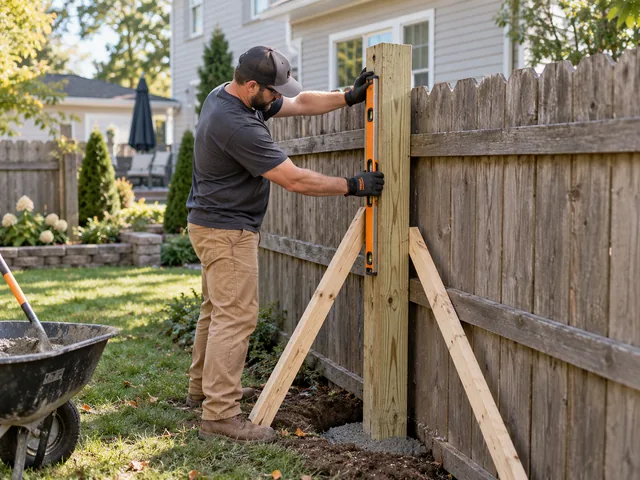
Winter damage rarely stops at the deck. If a post is leaning, read fence post leaning, or pair the deck with one of these outdoor repairs.
Leaning posts, broken panels and sagging gates fixed after storms and frost.
Wood and vinyl fences and gates installed straight, with utilities marked first.
Leaking seams, sagging runs and loose downspouts fixed to move water away.
Send photos of the whole deck and the damaged boards, railings and stairs, or describe the job, and request your free deck repair quote. We review it: if the photos show enough, you get a written quote; if the deck needs a closer look, we schedule a visit first, at no charge.
Request a deck repair quote