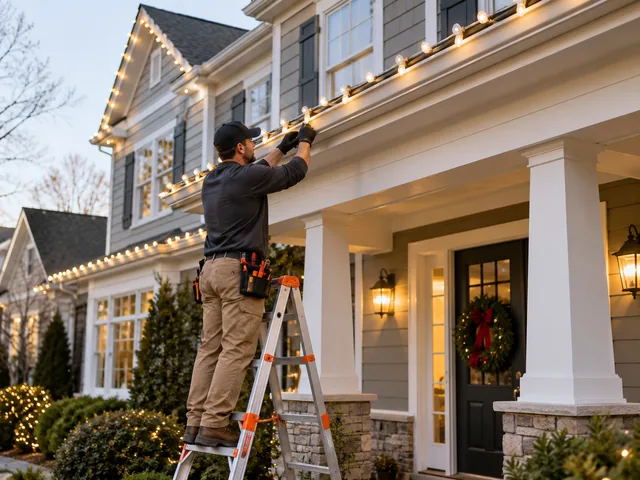
Christmas Light Installation
Outdoor holiday lights hung with clips, plugged into existing outlets, taken down.

Serving Essex & Union County, NJ
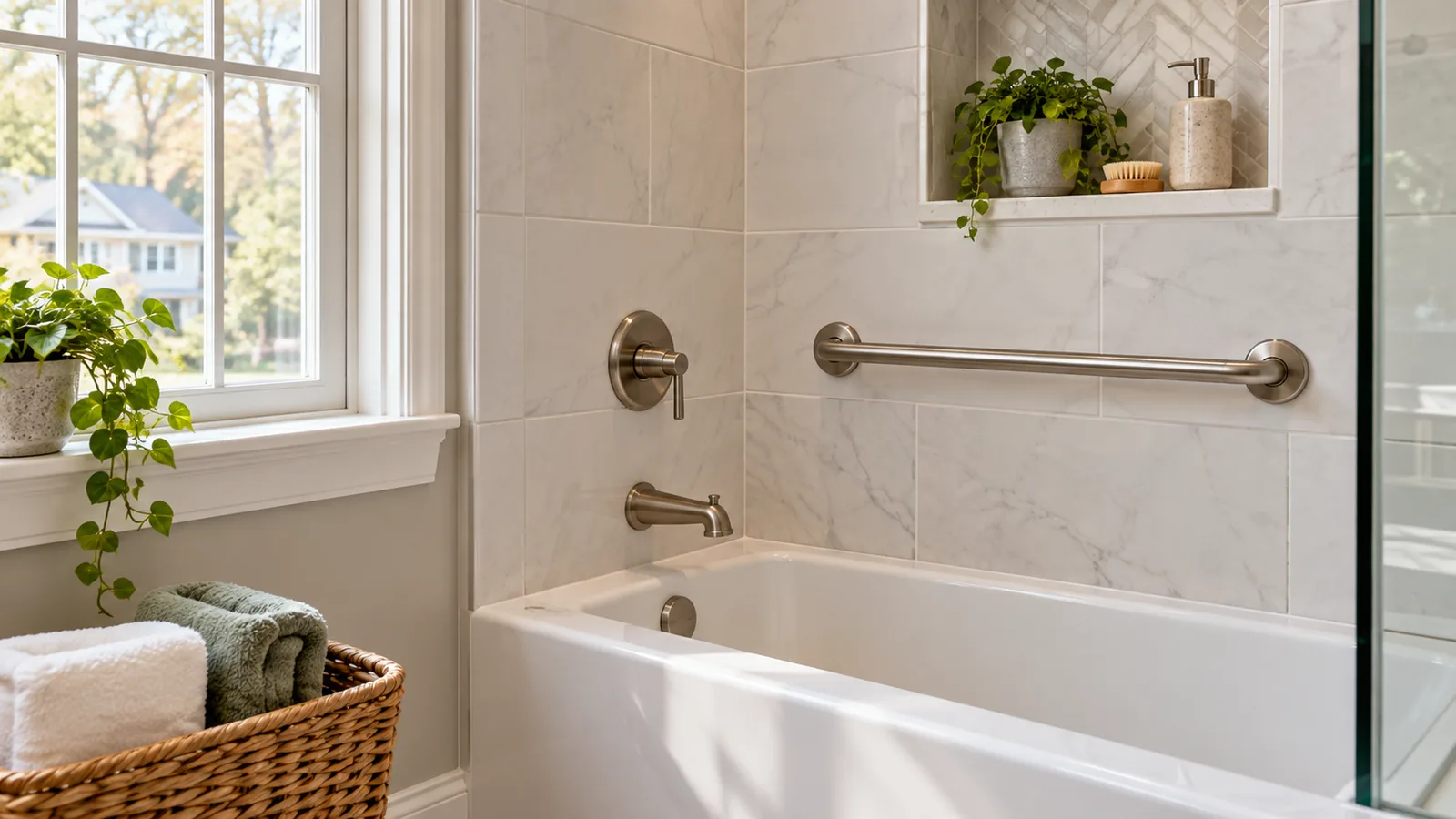
Grab bars placed where they help most and anchored into studs or rated anchors, so they hold when someone actually leans on them.
Get a grab bar installation quote
Grab bar installation mounts safety bars in tubs, showers and beside toilets, anchored into studs or rated anchors so they hold a person's full weight. Csiszer Property Maintenance, an insured handyman company serving Essex County and Union County, NJ, installs them for homeowners, older adults, their families and landlords. Tile and fiberglass are drilled with the right bits, and every hole is sealed against water.
Grab bar installation is choosing the spot, finding solid backing and fastening a grab bar so it can take a sudden pull without moving. It's one of our installation and mounting services, done for fall prevention in the rooms where slips happen most.
A grab bar only works if it stays put at the worst moment: a foot sliding on a wet tub floor, a knee giving out while standing up from the toilet. That's why the wall behind the bar matters more than the bar itself. Studs are the first choice; where the stud isn't in the right place, anchors rated for grab bars carry the load through hollow walls.
Many bathrooms in Essex County homes built before the 1960s have tile set in a thick mortar bed over wire lath, and newer ones often have fiberglass surrounds. Both can hold a grab bar well, but each needs a different drill bit, anchor and sealing method. Planning that from your photos is part of the job.
Straight, angled and flip-up bars placed for how the person actually moves in the room.
Bars at the shower entry and on the long wall, sealed so water can't reach the wall.
A bar beside or behind the toilet to steady sitting down and standing back up.
Screws into studs where possible, rated grab bar anchors where the stud isn't there.
Ceramic, porcelain and old mortar-bed tile drilled with the right bits and no hammer mode.
Positions and heights talked through with you and the person who will use the bar.
Add grab bars when someone in the home grabs the towel bar, the sink or the shower door to steady themselves. These are the six moments families call us most.
Towel bars aren't made for body weight, and they pull out of the wall when it matters.
The tub edge is where many bathroom slips start, especially on a wet floor.
After surgery or a fall, the bathroom often needs support before the first shower at home.
Adult children often arrange grab bars as one of the first safety steps for a parent.
Suction cups can release without warning. A mounted bar replaces them for good.
Landlords add grab bars when a tenant asks, and a clean install protects the tile.
Our grab bar installation takes five steps: photos, a review of the wall, a written quote, the install and a pull test.
Text or upload a photo of the tub, shower or toilet area, a close-up of the wall surface and the bars if you already bought them.
We check the wall material, likely stud positions and the best spots for the person using the bars. If photos aren't enough, we visit first, at no charge.
You get a written quote before anything is booked. Approve it and choose a weekday between 8 AM and 5 PM.
Studs are located, tile or fiberglass is drilled with the right bits, and the bar is fastened into studs or rated anchors.
Every hole and flange is sealed with silicone, the bar is pulled hard in every direction, and the bathroom is cleaned up.
Every grab bar installation includes placement advice, solid anchoring and sealing. What's left out is work that belongs to a licensed plumber or a health professional.
Included
Not included: needs a licensed or qualified pro
Grab bar installation cost depends on the number of bars, the wall surface and the kind of anchor the wall needs. Share photos or a short description, and the price is in writing before anything is scheduled.
Grab bars are quoted by the job, so the price covers placement, drilling, anchoring, sealing and the pull test. The wall surface changes the work the most: painted drywall is quick, while porcelain tile and old mortar-bed tile take slower drilling and more care.
Where the bar lands on a stud, it's fastened straight into wood. Where it doesn't, rated anchors add a step and a part. If you're planning bars in more than one bathroom, include them all in one request so they're quoted together.
| Factor | How it affects the price | Example |
|---|---|---|
| Number of bars | Several bars in one visit spread the setup across more work | One bar by the toilet vs. three in a tub |
| Wall surface | Porcelain and mortar-bed tile drill slower than drywall | A painted wall vs. 1950s tile |
| Anchor type | Rated hollow-wall anchors add parts and a step | A bar on a stud vs. a bar between studs |
| Surround type | Fiberglass and acrylic need specific anchors and sealing | A tiled tub vs. a one-piece surround |
| Bar style | Angled and flip-up bars take more layout | A straight bar vs. a flip-up bar |
| Other jobs in the same visit | Grouping safety jobs gets more done for one trip | Grab bars plus new smoke alarms |
Planning positions first? Our guide where to install grab bars goes room by room.
Most grab bar failures come from what's behind the bar: no stud, the wrong anchor or an unsealed hole. Here's what to avoid, how to pick between a stud and an anchor, and how to get ready.
Six mistakes cause most grab bar failures: plastic plugs in drywall, a towel bar used as support, suction cups on tile, holes left unsealed, hammer drilling tile and the wrong height for the user.
Standard wall plugs hold a picture, not a person. A grab bar needs a stud or an anchor rated for the job.
Towel bars look similar but aren't built for body weight and pull out of the wall during a slip.
Suction-cup handles can release without warning, especially on textured or grout-lined tile.
Water runs down the bar and into the screw holes. Without silicone, the wall behind the tile gets wet.
Hammer mode cracks glazed tile. Tile bits at low speed make a clean hole the first time.
A bar placed by a chart instead of the person's reach gets ignored. Height is set with the user in mind.
Fasten into studs when they sit where the bar is needed; use anchors made and rated for grab bars when the best spot falls between studs. As a benchmark, the 2010 ADA Standards ask public grab bars to withstand 250 pounds of force, sit 33 to 36 inches above the floor and leave 1½ inches between bar and wall.
Six small things make the visit smoother. For more ideas, see our home safety checklist for seniors.
Choose us for grab bar installation because one insured team places, anchors, seals and pull-tests every bar, with the price in writing first.
Bars that hold a person's full weight are installed by an insured handyman company.
Tub, shower and toilet bars across the house go on one written quote before drilling.
Every bar is pulled hard up, down and out, so you know it holds before anyone relies on it.
Tile bits, low speed and silicone on every hole, so the bathroom stays dry and uncracked.
If you arranged the visit for a parent, you hear when it's done, by text, call or email.
Each bar is placed for the person who will use it, not only for a standard drawing.
These are the questions families ask most before a grab bar installation. For other jobs, see all our installation and mounting services.
In public buildings, the 2010 ADA Standards set grab bars 33 to 36 inches above the floor, measured to the top of the bar. Homes don't have to follow the ADA, but it's the most used reference, and the height is adjusted to the person who will use the bar.
Not when it's done right. Tile is drilled with bits made for tile or porcelain, at low speed and without hammer mode, and every hole is sealed with silicone afterward.
Then the bar goes on anchors made and rated for grab bars in hollow walls. The ADA benchmark is a bar that holds 250 pounds of force, so the anchor is chosen from the bar and anchor makers' ratings, never a standard plastic plug.
Grab bars now come in finishes and shapes that look like towel bars or match the faucet. Many people add them before they need them, as simple fall prevention, the same way they'd add a night light.
The most useful spots are the tub or shower entry, the long wall of the tub, and beside the toilet. Our room-by-room guide where to install grab bars covers each one.
Often, yes. Fiberglass and acrylic surrounds are checked for what's behind them, and the bar is mounted with anchors made for that kind of wall. Send a photo of the surround and the tub edge.
Either can work: a bar on the side wall helps most when standing up, and one behind the toilet adds support when there is no side wall. Both are common installs. If no wall is close enough, a toilet safety frame may fit better, and you'll hear that before any drilling.
No. Towel bars and suction-cup handles aren't built to hold a person's weight and can pull out during a slip. A grab bar is anchored to carry a sudden load.
Csiszer Property Maintenance, an insured handyman company serving Essex County and Union County, NJ. Adult children often send the photos and approve the quote, and we coordinate the visit with the parent. Tell us who will be home and how you'd like to hear when the job is done.
Yes. Many families add carbon monoxide detector installation and new smoke alarms, or TV mounting at a comfortable height, to the same visit. Grouping jobs makes the most of one trip.
Still have a question about grab bars?
Send it, with a photo if you have one. We answer by phone, text or email, Monday to Friday, 8 AM to 5 PM.
Safety and comfort jobs often go together: alarms on every level, a Christmas light installation service so no one climbs a ladder, or a TV mounted at the right height. For TVs above a mantel, see TV over fireplace.
Outdoor holiday lights hung with clips, plugged into existing outlets, taken down.
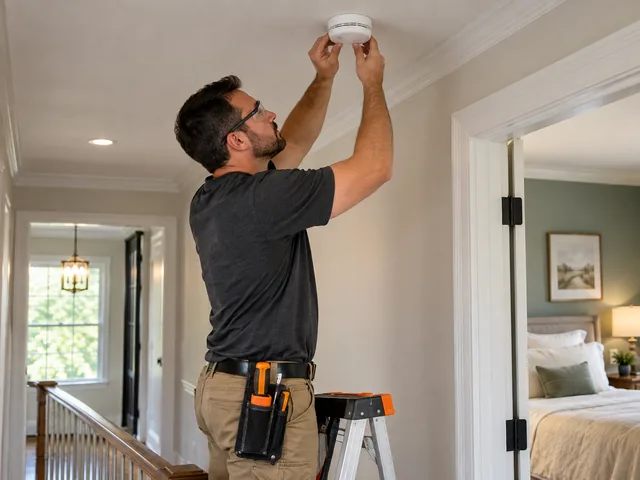
Battery and plug-in smoke and CO alarms placed on every level and tested.
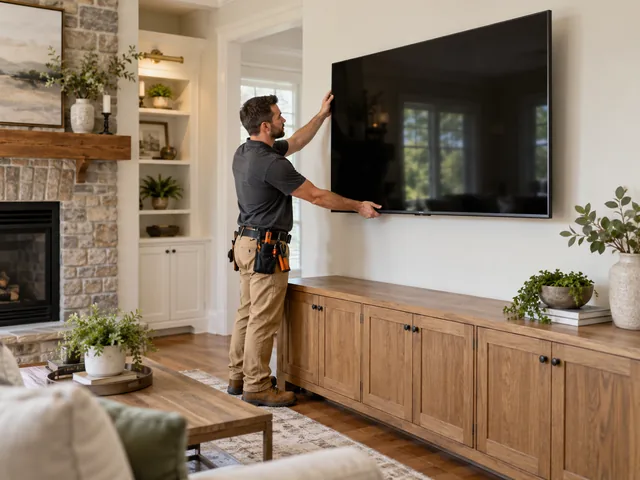
TVs mounted level on drywall, plaster or brick, with cords neatly managed.
Send a photo of the tub, shower or toilet area, a close-up of the wall surface and your town, and request your grab bar installation quote. We review it: if the photos show enough, you get a written quote; if the job needs a closer look, we schedule a visit first, at no charge.
Request a grab bar installation quote