TV Mounting
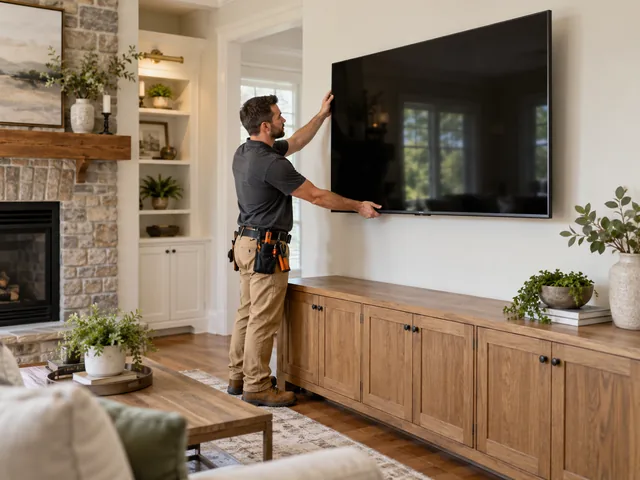
TVs mounted level on drywall, plaster or brick, with cords neatly managed.

Serving Essex & Union County, NJ
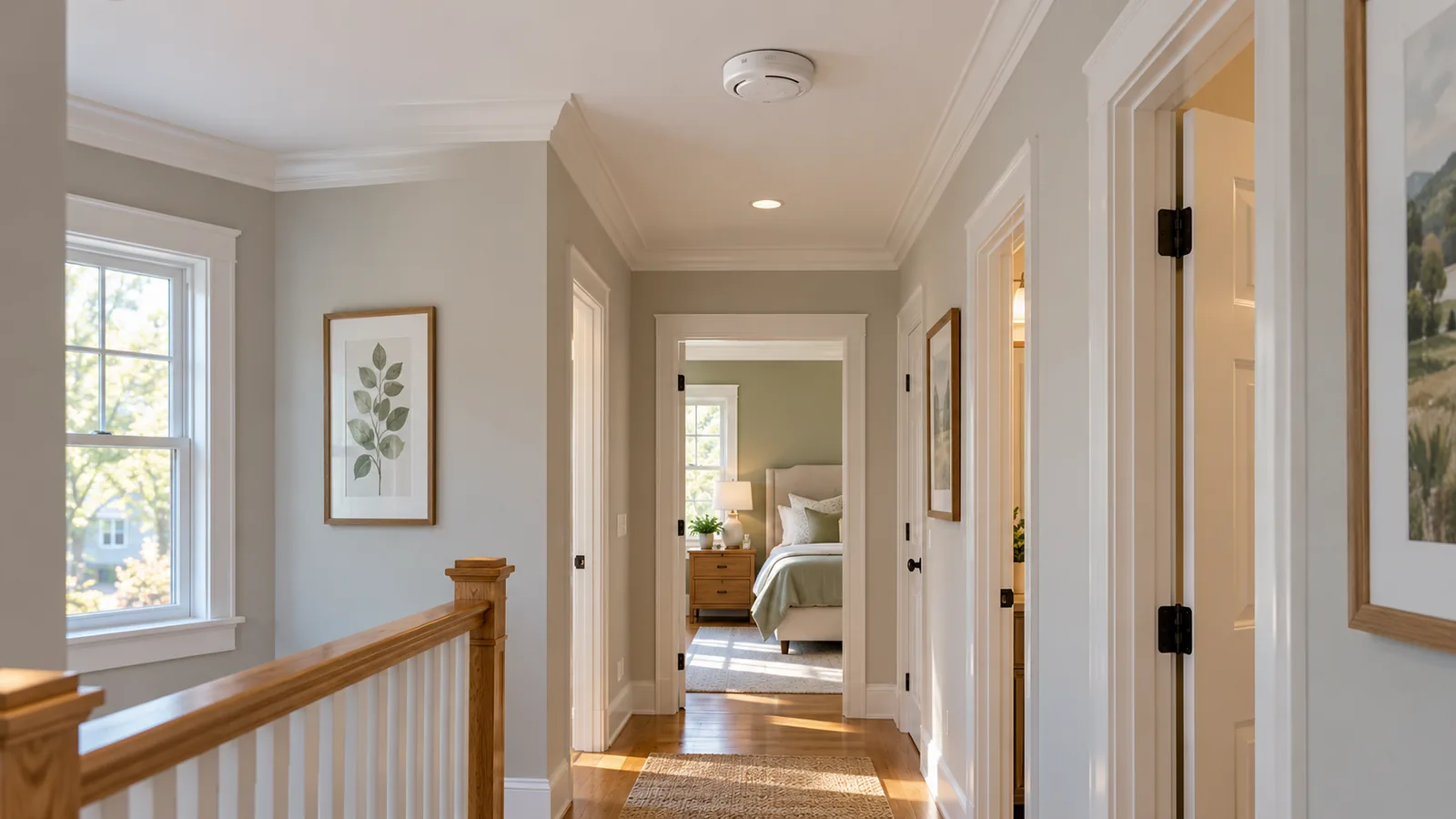
Battery, 10-year sealed and plug-in smoke and carbon monoxide alarms placed where New Jersey rules call for them, and tested before we leave.
Get a smoke detector installation quote
Smoke detector installation puts battery, 10-year sealed or plug-in smoke and carbon monoxide alarms on every level and near sleeping areas, then tests each one. Csiszer Property Maintenance, an insured handyman company serving Essex County and Union County, NJ, installs them for homeowners, older adults, landlords and sellers. Alarms wired to the house's electrical system are replaced by a licensed electrician.
Smoke detector installation is choosing the right spots, mounting each smoke detector or CO alarm on its base and testing it. It's one of our mounting services, limited to battery and plug-in alarms, which New Jersey treats as ordinary maintenance with no permit.
Two dates decide what a New Jersey home needs. Since January 1, 2019, the Division of Fire Safety requires 10-year sealed battery smoke alarms in homes built before January 1, 1977. Homes built after that date were required to have hardwired alarms, and those stay hardwired. Many houses across Essex County and Union County were built well before 1977, so most of them fall under the sealed battery rule.
Placement matters as much as the alarm. The state asks for an alarm on every level, including the basement, and outside each sleeping area, no more than 10 feet from each separate sleeping area. Alarms go on the ceiling or on the wall within 12 inches of it, and CO alarms go near sleeping areas when the house has a fuel-burning appliance or an attached garage.
Alarms with a battery that can't be removed, required in New Jersey homes built before 1977.
Old or expired battery alarms taken down and replaced with current models.
Battery and plug-in CO alarms placed near each sleeping area.
Single units that detect both, which New Jersey requires to be 10-year sealed.
Basement, each floor and outside bedrooms, following New Jersey's placement rules.
Each new alarm tested on site, and existing battery alarms checked in the same visit.
You need smoke alarm replacement when an alarm is old, missing, chirping or about to be checked by the town. These are the six moments we hear about most.
A sale or new lease needs the town's certificate, and alarms are checked before it's issued.
A battery alarm that keeps chirping with a fresh battery is usually at the end of its life.
Every alarm has a date printed on it. Sealed alarms are designed to be replaced after 10 years.
New Jersey asks for one on every level, and the basement is the one most often skipped.
Fuel-burning appliances or an attached garage mean CO alarms belong near the bedrooms.
Ceiling alarms are hard to test from a step stool. Families often arrange new ones for a parent.
Our smoke detector installation takes five steps: photos, a check of what the house needs, a written quote, installation and testing.
Text or upload a photo of each alarm you have now, one of each floor and bedroom hallway, and the year the house was built.
We confirm whether the alarms are battery or wired to the house, and how many each level needs. Hardwired alarms are referred to an electrician. If photos aren't enough, we visit first, at no charge.
You get a written quote before anything is booked. Approve it and choose a weekday between 8 AM and 5 PM.
Old battery alarms come down, and each new alarm base is mounted on the ceiling or within 12 inches of it.
Each alarm is activated and tested, you see where every one is, and old alarms and packaging are cleaned up.
Every smoke detector installation includes placement, mounting and testing of battery and plug-in alarms. Anything wired to the house, and the town's certificate inspection, stay with the licensed pros and officials.
Included
Not included: needs a licensed pro or official
Smoke detector installation cost depends on the number of alarms, the alarm type and how high the ceilings are. Share photos or a short description, and the price is in writing before anything is scheduled.
Alarm installs are quoted by the job, so the price covers removing old alarms, mounting the new ones and testing each one. The count is the main factor: a small ranch may need a few alarms, while a three-story house with a finished basement and several bedrooms needs many more.
Alarm type and ceiling height come next. Combination smoke and CO alarms cover two needs with one unit, and stairwell or cathedral ceilings take longer ladder setups. If you're selling, tell us the date of the fire official's inspection so the visit is planned around it.
| Factor | How it affects the price | Example |
|---|---|---|
| Number of alarms | Each level and sleeping area adds an alarm to mount and test | A small ranch vs. three floors and a basement |
| Alarm type | Combination units cover smoke and CO with one install | Separate alarms vs. combination alarms |
| Ceiling height | Stairwells and tall ceilings add ladder setup | An 8-foot hallway vs. a two-story foyer |
| Old alarms to remove | Taking down old bases and filling holes adds a step | Bare ceilings vs. old alarms on every floor |
| Who buys the alarms | Alarms you already bought are installed as they are | Your alarms vs. models bought for the job |
| Other jobs in the same visit | Grouping small jobs gets more done for one trip | New alarms plus two grab bars |
Selling soon? Read NJ smoke detector certificate when selling a home to see what the town checks.[PREENCHER: a Csiszer compra os alarmes ou só instala os do cliente?]
Most alarm problems come from the wrong type, the wrong spot or a missed level. Here's what to avoid, who installs what, and how to prepare for a sale.
Six mistakes cause most gaps in alarm protection and failed sale inspections: swappable batteries in a pre-1977 home, battery alarms over hardwired bases, skipping the basement, mounting too close to the kitchen, placing alarms in the wall-ceiling corner and no CO alarm with gas heat.
Homes built before 1977 need 10-year sealed alarms. A 9-volt model won't pass the resale check.
Battery alarms can't replace alarms the code requires to be hardwired. Those go to an electrician.
New Jersey asks for an alarm on every level, and the basement is the one most often missing.
Alarms that go off every time someone cooks get their batteries pulled. Placement avoids that.
Alarms belong on the ceiling or on the wall within 12 inches of the ceiling, not tucked in the corner.
A gas furnace, boiler or water heater, or an attached garage, means CO alarms near the bedrooms.
A handyman installs battery and plug-in alarms, which New Jersey lists as ordinary maintenance; anything wired to the house goes to a licensed electrician. Our guide can a handyman do electrical work in NJ explains the line.
New Jersey requires a Certificate of Smoke Alarm, Carbon Monoxide Alarm and Portable Fire Extinguisher Compliance (CSACMAPFEC) from the town before a one- or two-family home is sold, leased or changes occupants. Since P.L.2025, c.19 (February 2025), a portable fire extinguisher is no longer part of that state requirement.
Choose us for smoke detector installation because one insured team places and tests every battery alarm and tells you plainly when a job belongs to an electrician.
Alarms on every level and outside each sleeping area are installed by an insured handyman company.
Combination smoke and CO alarms are checked to be the 10-year sealed battery type before they go up.
Every level, the basement and outside each sleeping area, on the ceiling or near it.
If your alarms are hardwired, you hear that up front so a licensed electrician can replace them.
Each alarm is activated and tested before we leave, and you see where every one is.
CO alarms go near sleeping areas when the house has a fuel-burning appliance or an attached garage.
These are the questions people ask most before a smoke detector installation. For other jobs, see all our installation and mounting services.
Before you sell, lease or change occupants of a one- or two-family home in New Jersey, you need a certificate of smoke alarm, carbon monoxide alarm and portable fire extinguisher compliance from your town's fire official. We can install battery alarms before that inspection. See our guide NJ smoke detector certificate when selling a home.
No. Hardwired alarms run on house current, and New Jersey requires a licensed electrician for electrical work of 10 volts or more. Battery alarms also can't take the place of alarms the code requires to be hardwired.
It's a smoke alarm with a battery that can't be removed, designed to last 10 years before the whole alarm is replaced. Since January 1, 2019, New Jersey requires them in homes built before January 1, 1977, and they're checked before a sale or change of occupants.
On every level, including the basement, and outside each separate sleeping area. New Jersey's Division of Fire Safety says no more than 10 feet from each sleeping area. They go on the ceiling or on the wall within 12 inches of the ceiling.
Yes, if the home has a fuel-burning appliance, such as a gas furnace, boiler, water heater or stove, or an attached garage. CO alarms go in the immediate vicinity of each sleeping area, and battery or plug-in types are allowed.
No, not for battery smoke alarms or battery and plug-in CO alarms. New Jersey's construction code treats them as ordinary maintenance, which needs no permit. Hardwired alarms are a separate job for a licensed electrician.
Check the date printed on the back of each alarm. 10-year sealed alarms are designed to be replaced as a whole unit at the end of their life, and a battery alarm that keeps chirping after a fresh battery is usually done.
Yes. In New Jersey, a single-station combination smoke and CO alarm has to be the 10-year sealed battery type. We check that the model you bought meets that before it goes up.
Csiszer Property Maintenance, an insured handyman company serving Essex County and Union County, NJ. Every alarm we install is tested with its test button, and existing battery alarms can be checked in the same visit. Tell us how many alarms the house has now.
Yes. Many customers add a TV mounting service, picture hanging service or shelf installation service while we're there. Grouping jobs makes the most of one trip.
Still have a question about your alarms?
Send it, with a photo if you have one. We answer by phone, text or email, Monday to Friday, 8 AM to 5 PM.
Moving in, getting ready to sell or catching up on the house? These mounting jobs often go on the same visit as new alarms.
TVs mounted level on drywall, plaster or brick, with cords neatly managed.
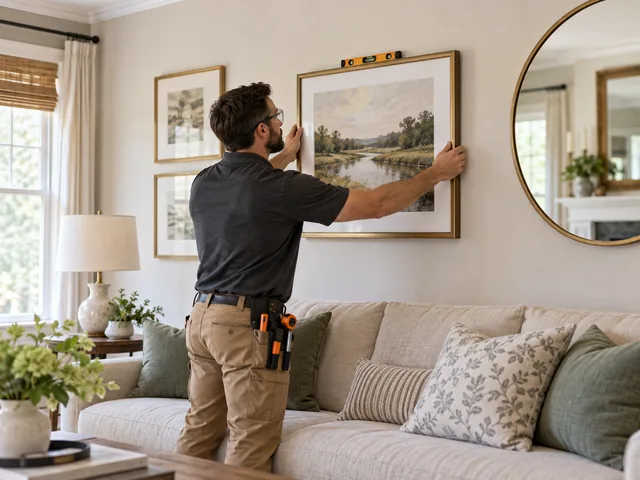
Art, mirrors and gallery walls hung level, at the right height and anchors.
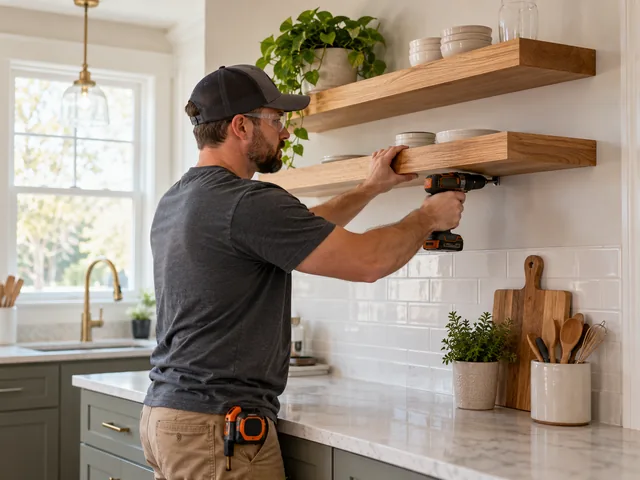
Floating and bracket shelves mounted into studs or anchors to hold real weight.
Send a photo of each alarm you have now, one of each floor and the year the house was built, and request your smoke detector installation quote. We review it: if the photos show enough, you get a written quote; if the job needs a closer look, we schedule a visit first, at no charge.
Request a smoke detector installation quote