Popcorn Ceiling Removal
Our popcorn ceiling removal service tests first, then finishes smooth.

Serving Essex & Union County, NJ
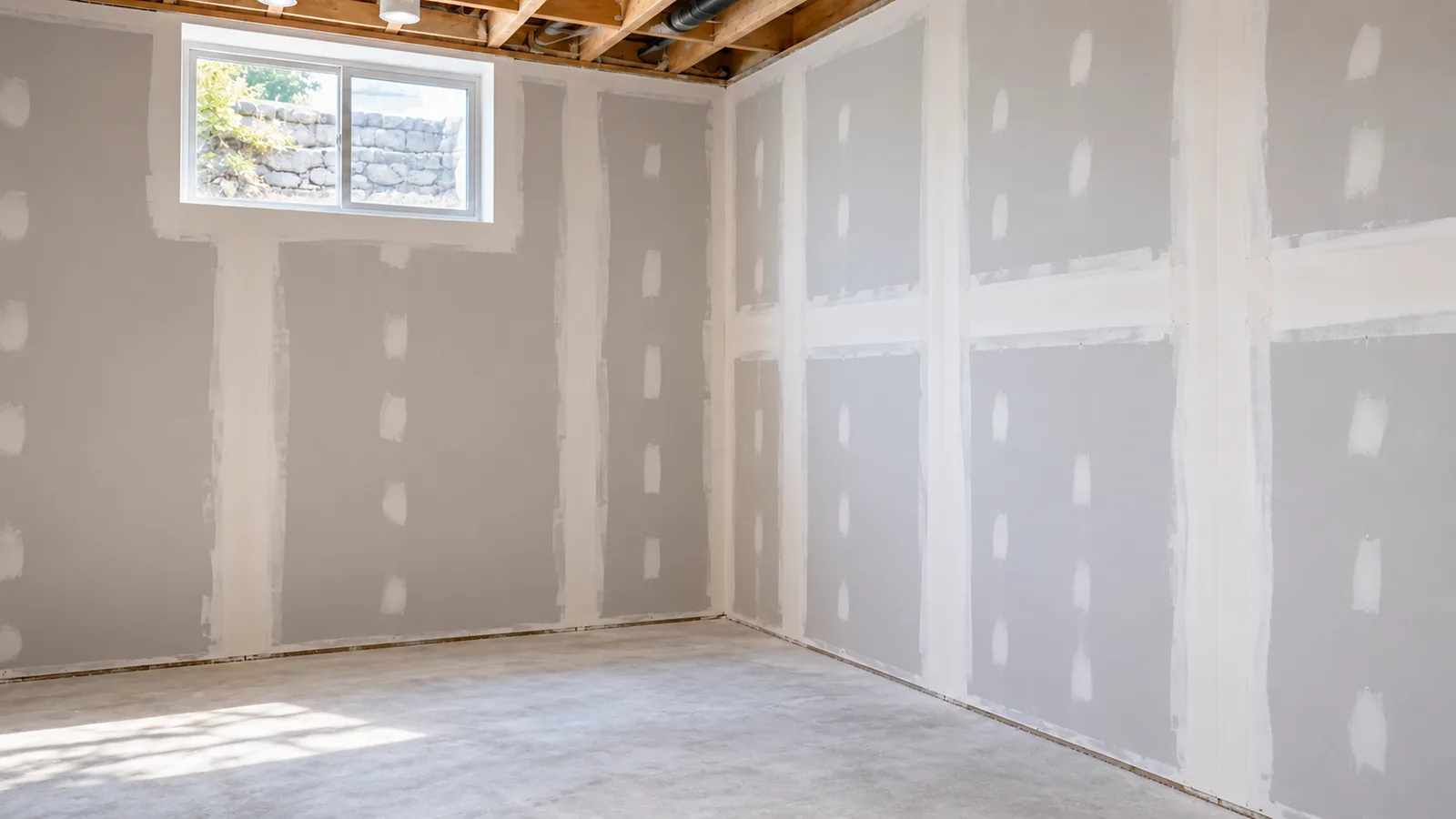
Drywall hung on your existing framing, taped, finished to the level you choose and left ready for primer and paint, for closets, small rooms, basements and replacement sections.
Get a drywall installation quote
Drywall installation hangs new gypsum board on existing framing, then tapes, finishes and sands it so the walls and ceilings are ready for paint. Csiszer Property Maintenance, an insured handyman company serving Essex County and Union County, NJ, installs it for homeowners, landlords and businesses in rooms, closets, small basements and repair sections. Large remodels and additions stay with a general contractor.
Drywall installation, also called sheetrock installation, fastens gypsum panels to each stud and joist, covers the seams with tape and joint compound, and sands the surface smooth. It covers the new-board side of the work in all drywall services, from one closet to a small finished basement.
Hanging the board is the fast part. What decides how the room looks for the next twenty years is the layout and the finish: where the seams land, how the corners are protected with corner bead and how many coats of compound go on before paint. Seams that start at the corner of a door or window crack there first, so sheets are laid out to run past those corners instead.
Drywall finishing is measured on a scale set by the Gypsum Association (GA-214), from Level 0 to Level 5. Level 4 is the usual choice for walls with flat paint. Level 5 adds a skim coat over the whole surface for glossy paint, dark colors or rooms where low sunlight rakes across the wall. Your quote names the level so you know exactly what you're getting.
Panels cut and screwed to existing studs and joists, with seams laid out away from corners.
Every seam and inside corner covered with tape embedded in joint compound so it doesn't crack.
Coats of compound feathered and sanded to the finish level named in your quote.
Outside corners protected with corner bead so they stay straight and survive daily bumps.
Moisture-resistant board where the room calls for it, kept off the concrete floor.
Walls left sanded and ready for primer, with offcuts and dust cleaned up at the end.
You need drywall installation when framing is open, a section is too damaged to patch, or a small space needs finished walls. These are the six we handle most.
An office, playroom or storage room framed out and waiting for walls and a ceiling.
Open framing under stairs or in an attic closet closed in with board, tape and corner bead.
Wide damage, crumbling board or many holes close together are faster to replace than to patch.
After a licensed trade finishes inside the wall, the opening is closed with new drywall and finished.
Once the leak is fixed and the framing is dry, the missing section is rebuilt and blended in.
Landlords replace beat-up sections during a turnover so the unit shows clean, flat walls.
Our drywall installation takes five steps: photos and measurements, a review of the framing, a written quote, hanging and taping, and finishing and cleanup.
Text or upload a photo of the room and the open framing, or describe the space, with the wall and ceiling measurements.
We check that the framing is straight and dry and that any wiring or plumbing work is finished. If the photos show enough, we quote from them; if not, we visit at no charge.
The quote names the board type, the finish level and debris removal. Approve it and choose a weekday between 8 AM and 5 PM.
Ceilings go up first, then walls. Seams are taped, corners get corner bead, and the first coats of compound go on.
Each coat dries before the next, the surface is sanded to the agreed level, and offcuts and dust are cleaned up before we leave.
Every drywall installation includes hanging, taping, finishing and debris removal. What's left out is licensed trade work and projects that need a general contractor.
Included
Not included: needs a licensed pro or general contractor
Drywall installation cost depends on the square footage, walls or ceilings, the finish level and debris removal. Photos and measurements help us review the job, and the price is in writing before anything is scheduled.
Most of the labor in drywall is in the finishing, not the hanging. A room with many corners, windows and a closet has far more tape and corner bead per square foot than a plain rectangle, and a Level 5 finish adds a full skim coat on top of Level 4. That's why two rooms with the same square footage can get different quotes.
Ceilings cost more to hang than walls because the board is lifted overhead and fastened across the joists. Basements add their own details, like moisture-resistant board and cuts around beams, ducts and small windows.
| Factor | How it affects the price | Example |
|---|---|---|
| Square footage | More board, tape and compound, and more finishing time | A closet vs. a 12 x 14 room |
| Ceilings vs. walls | Overhead board takes more setup and handling | Walls only vs. walls and ceiling |
| Level of finish | Level 5 adds a skim coat over the whole surface | Flat paint vs. glossy paint in raking light |
| Corners and openings | Windows, doors, beams and ducts add cuts and corner bead | A plain room vs. a basement with soffits |
| Board type | Moisture-resistant board costs more than standard panels | A bedroom vs. a basement room |
| Debris removal | Offcuts and old material have to leave the site | New framing vs. a torn-out section |
For typical numbers by room size, read our guide on drywall installation cost for small rooms and basements.
Most drywall problems come from layout and prep, not the board: seams in the wrong place, board touching concrete or a finish too light for the paint. Here's what to avoid.
Six mistakes cause most new drywall problems: seams at door and window corners, board sitting on the slab, overdriven screws, skipped corner bead, too light a finish for the paint and closing a wet or unfinished wall.
A joint that starts at a corner cracks there first. Sheets should run past the opening instead.
Drywall touching a concrete floor wicks moisture. In basements it's kept a small gap above the slab.
Screws that break the paper face lose their hold and pop later. They should dimple the surface, not tear it.
Taped outside corners dent and crack with the first vacuum or box. Corner bead keeps them straight.
Glossy or dark paint shows every seam on a Level 3 or 4 wall. Those rooms need a Level 5 skim coat.
Damp framing or unfinished wiring behind new drywall means cutting it open again later.
Drywall installation from a handyman fits rooms on framing that's already there; a general contractor fits projects that need permits and several trades. Smaller openings are often a plaster repair or patch instead.
Six things to confirm before the board arrives. If the room lost drywall to a leak, see our ceiling water damage repair service first.
Choose us for drywall installation because one insured team hangs, tapes and finishes, and the finish level and price are in writing first.
Hanging, taping and finishing are done by an insured handyman company, in homes and offices.
You get a written quote before anything is scheduled, with board type and debris removal spelled out.
The quote says which GA-214 level you're getting, so the walls match the paint you plan to use.
Seams are planned away from door and window corners, where new drywall usually cracks first.
If the project needs permits and several trades, you hear it before you get a quote, not halfway through.
Basements get moisture- and mold-resistant board, held off the concrete so it doesn't wick water.
These are the questions people ask most before drywall installation. For repairs and ceilings, see all drywall services.
It depends on the square footage, whether it's walls or ceilings, the level of finish and how much debris has to go. Send room photos and measurements or describe the job: if that shows enough, you get a written quote; if not, we schedule a visit first, at no charge. Either way, the price is in writing before anything is scheduled. Our drywall installation cost guide explains what changes the price.
Small basements and single rooms, yes. Large finishing projects that need permits, new framing and several trades are better with a general contractor, and you'll hear that before you get a quote.
A licensed electrician. Any change to wiring is licensed work in New Jersey. The drywall is cut cleanly around existing boxes, and if an electrician is adding boxes, their work should be done before the drywall goes up.
After the final coat of joint compound is dry, sanded and primed. Drying depends on humidity, and basements in a New Jersey summer dry slower than upstairs rooms. The walls are left primer-ready, and painting can be added to the same quote.
Yes. Ceilings take more setup and are usually hung before the walls so the wall sheets support the ceiling edges. Thicker board is often used overhead to resist sagging between joists.
Small framing repairs, yes, like adding blocking or straightening a stud. New walls, moved walls and structural framing belong to a general contractor, and drywall installation starts on framing that's already in place.
Moisture- and mold-resistant board is the usual choice below grade, installed with a small gap above the concrete floor so it doesn't wick water. If the basement shows active water, that's solved before any drywall goes up.
It's the Gypsum Association's scale from Level 0 to Level 5 for how much taping and compound goes on. Level 4 is typical for walls with flat paint; Level 5 adds a skim coat for glossy paint or harsh light. Your quote names the level.
Sometimes, but plaster is thicker, so the new board has to be shimmed to sit flush. Often a plaster repair is the better choice.
Csiszer Property Maintenance, an insured handyman company serving Essex County and Union County, NJ, hangs and finishes drywall in rooms, closets and small basements. Offcuts, empty compound buckets and dust are cleaned up before we leave, and debris removal is listed in your quote.
Still have a question about your room?
Send it with a photo or a short description. We answer by phone, text or email, Monday to Friday, 8 AM to 5 PM.
If the ceiling has popcorn texture, the drywall took on water or the walls are plaster, one of these fits better.
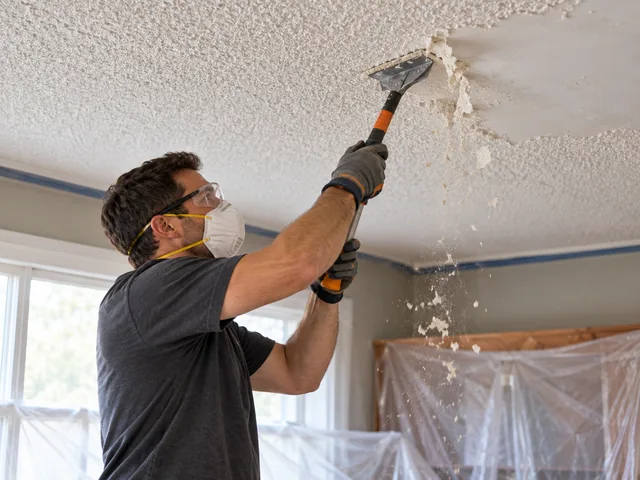
Our popcorn ceiling removal service tests first, then finishes smooth.
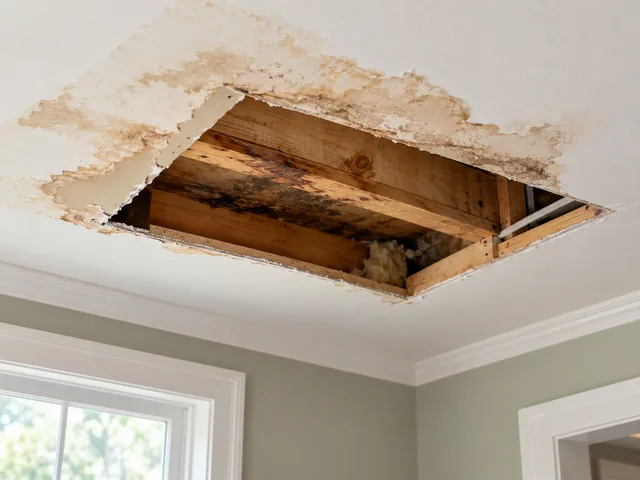
Stained or soft drywall replaced after the leak is fixed and the area is dry.
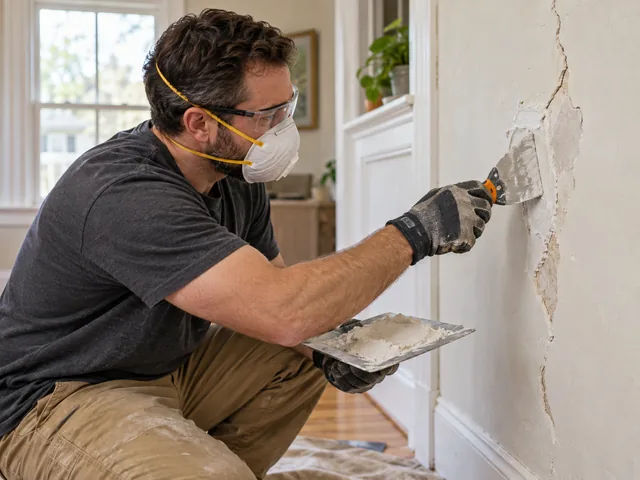
Cracked and loose plaster in older homes repaired without tearing out walls.
Send photos and measurements or describe the room, and request your free drywall installation quote. We review it: if the photos show enough, you get a written quote; if the space needs a closer look, we schedule a visit first, at no charge. Either way, the price is in writing before any work is scheduled.
Request a drywall installation quote